

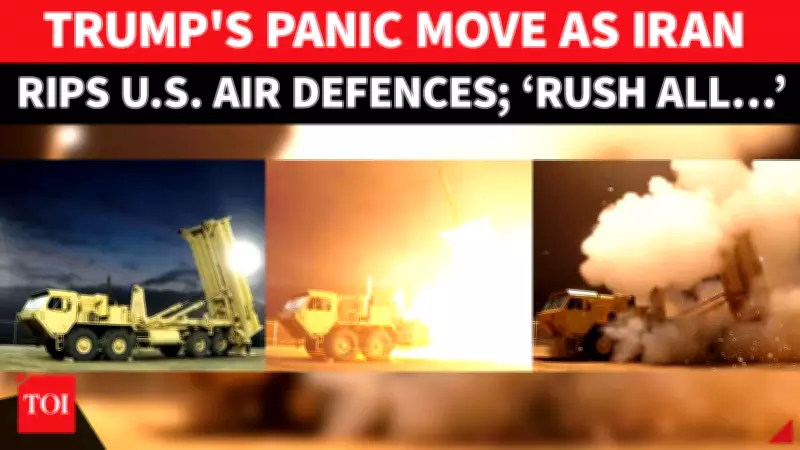
US Shifts THAAD Missile Defense Systems from South Korea to Middle East Amid Iran Tensions
The United States has undertaken a significant strategic redeployment, moving six Terminal High Altitude Area Defense (THAAD) missile defense systems from South Korea to the Middle East. This urgent transfer comes as tensions with Iran escalate dramatically, with Iranian forces launching drone and missile attacks that have challenged American air defense capabilities in the region.
Urgent Boost to Air Defense Capabilities
In response to the heightened threat environment, Washington is rapidly enhancing its air defense posture to safeguard troops and critical assets across the Middle East. The redeployment of THAAD systems, which are designed to intercept short, medium, and intermediate-range ballistic missiles, underscores the seriousness of the situation. Videos circulating online depict U.S. military trucks transporting the advanced THAAD units under the cover of night, highlighting the covert and time-sensitive nature of this operation.
Background and Strategic Implications
The decision to relocate THAAD systems from Seoul, where they were previously stationed as a deterrent against North Korean missile threats, marks a pivotal shift in U.S. military priorities. This move reflects the growing focus on countering Iranian aggression, which has included recent attacks on American and allied interests. The redeployment is part of a broader effort to fortify defenses amid ongoing conflicts and diplomatic strains in the Gulf region.

- Number of Systems: Six THAAD units have been transferred.
- Origin: Previously deployed in South Korea.
- Destination: Middle East, to bolster regional defenses.
- Timing: Conducted urgently, with nighttime movements captured on video.
Regional Context and Escalating Threats
Iran's military actions, including drone and missile strikes, have prompted this defensive reinforcement. The THAAD systems are expected to provide a critical layer of protection against potential ballistic missile threats from Iran, which has been involved in recent hostilities targeting U.S. and Israeli positions. This redeployment aligns with broader U.S. efforts to maintain stability and security in a volatile region, as geopolitical tensions continue to mount.
The shift of THAAD assets from Asia to the Middle East illustrates the dynamic nature of global security challenges and the U.S. military's adaptability in responding to emergent threats. As the situation evolves, further developments in air defense strategies and international diplomacy are anticipated.






