The United States military conducted strikes on Iranian coastal radar installations on Saturday, following the interception of drones launched by Iran towards the strategic Strait of Hormuz. This action marks a significant escalation in the ongoing tensions between the two nations and complicates efforts to broker a ceasefire in the broader conflict.
Details of the Incident
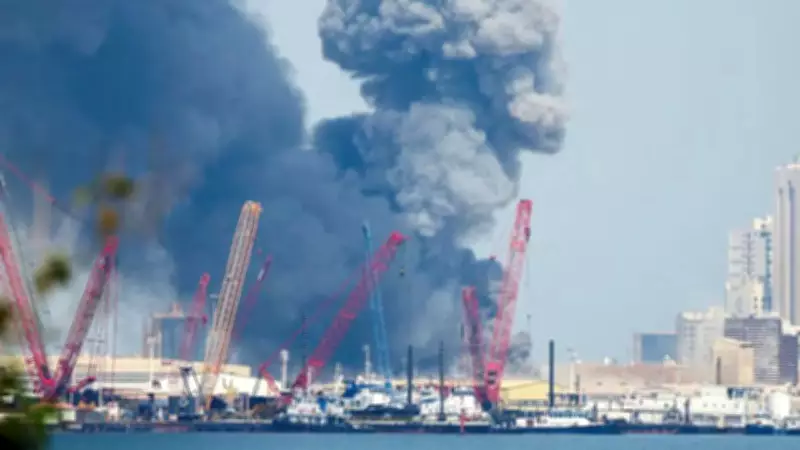
A US official informed Reuters that the American military believed the four Iranian drones were targeting regional maritime traffic. In response, US Central Command announced on social media platform X that it had struck Iranian surveillance sites located in Goruk and on Qeshm Island, both situated along the Strait of Hormuz. The strait is a critical waterway for global oil shipments.
Iran's Response and Accusations
Iran's foreign ministry condemned the US strikes, stating that they violated a ceasefire agreement reached on April 8. The ministry further asserted that such repeated transgressions indicate Washington's lack of genuine intent to de-escalate tensions. It warned that the United States would bear full responsibility for the repercussions of its "illegal actions."

In a retaliatory move, Iran's Revolutionary Guards claimed they attacked US bases in Kuwait and Bahrain. They also stated they fired upon four tankers attempting to traverse the strait without Iran's authorization. Kuwait's army reported engaging seven ballistic missiles that flew over residential areas, causing material damage but no casualties. In Bahrain, air raid sirens were activated, and residents were advised to seek shelter.
Diplomatic Efforts and Mediation
Amid the escalating hostilities, Pakistan's Interior Minister Mohsin Naqvi arrived in Tehran on Saturday for talks with Iranian officials, including Foreign Minister Abbas Araqchi. Iranian state media confirmed the visit, and a Pakistani source indicated that Naqvi would deliver a message from Pakistan to Iran's Supreme Leader, Ayatollah Mojtaba Khamenei. Pakistan has been acting as a mediator in efforts to end the conflict.
Trump's Comments and Ceasefire Prospects
Despite the heightened tensions, US President Donald Trump expressed optimism about the situation with Iran during a press briefing on Friday. He stated, "The situation with Iran seems to be going quite well," and added, "We're going to come out of Iran very quickly and it's going to be very strong one way or the other, whether it's a piece of paper or the very tough way." However, Trump appears to be increasingly constrained by the war's dynamics.
US and Iranian negotiators had reached a tentative agreement a week prior to extend the ceasefire by 60 days and initiate a new round of talks on Iran's nuclear program. However, Trump has called for unspecified modifications that Iran has yet to ratify. When asked about the delay, Trump told NBC's "Meet the Press" that it was because "it's a very hard thing for them." He also noted that Iran still possesses 21% to 22% of its missiles, despite one of the war's stated objectives being the destruction of Tehran's missile program.
For continuous updates on the US-Iran conflict, follow our live coverage.