US Military Destroys Iran's Guards Headquarters in Major Escalation
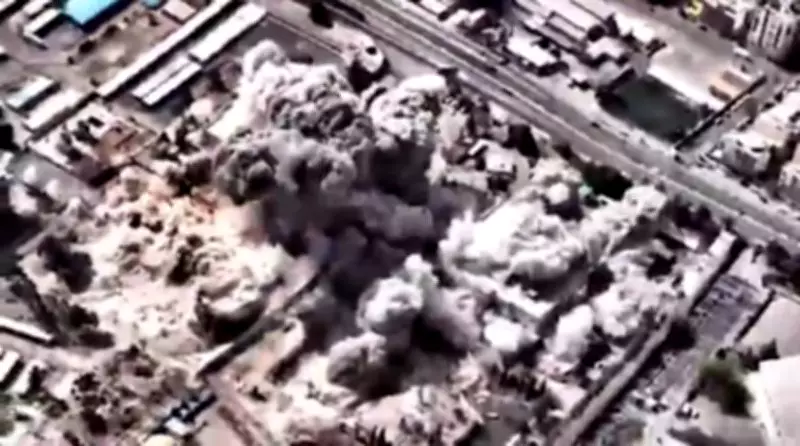
The United States military has conducted a targeted strike, destroying the headquarters of Iran's Islamic Revolutionary Guard Corps (IRGC). This aggressive action marks a significant escalation in the already volatile Middle East conflict, raising fears of broader regional instability.
Details of the Strike and Strategic Implications
According to reports, the US operation was meticulously planned and executed, aiming to "cut off the snake's head" by targeting the IRGC's central command structure. The strike specifically targeted the Guards' headquarters, a key military and strategic nerve center for Iran's operations across the Middle East. This move is seen as a direct response to Iran's alleged involvement in various proxy conflicts and attacks against US interests in the region.
The destruction of this facility is expected to severely disrupt the IRGC's command and control capabilities, potentially hampering its ability to coordinate activities with allied militias in countries like Syria, Iraq, Lebanon, and Yemen. Analysts suggest that this strike represents a shift in US strategy, moving from containment to a more assertive posture aimed at degrading Iran's military infrastructure.

Regional Reactions and Escalating Tensions
The strike has immediately heightened tensions across the Middle East, with regional powers closely monitoring the fallout. Iran has condemned the attack as an "act of aggression" and vowed retaliation, threatening to further destabilize the area. Neighboring countries, including Saudi Arabia and Israel, have expressed concerns over potential spillover effects, such as increased militia attacks or retaliatory strikes on their territories.
This escalation comes amid ongoing conflicts in the region, including the war in Gaza and skirmishes involving Iran-backed groups. The US action risks drawing other nations into the fray, complicating diplomatic efforts to de-escalate tensions. International observers warn that without swift diplomatic intervention, the situation could spiral into a larger confrontation, affecting global oil markets and security.
Broader Context and Future Outlook
The strike underscores the deepening US-Iran rivalry, which has intensified over issues like nuclear proliferation and regional influence. In recent years, the IRGC has been implicated in attacks on shipping lanes in the Persian Gulf and support for militant groups, prompting US countermeasures. This latest development signals a willingness by the US to take direct military action, rather than relying solely on sanctions or diplomatic pressure.
Looking ahead, the aftermath of this strike will likely shape Middle East dynamics for months to come. Key factors to watch include:
- Iran's Response: Whether Tehran opts for direct military retaliation or escalates through proxy forces.
- Diplomatic Efforts: Potential for renewed talks or mediation by international bodies like the United Nations.
- Regional Alliances: How other Middle Eastern nations align themselves in response to the heightened conflict.
- Global Impact: Effects on oil prices, trade routes, and international security concerns.
As the situation unfolds, the world watches anxiously, hoping to avoid a full-scale war that could have devastating consequences for the Middle East and beyond.