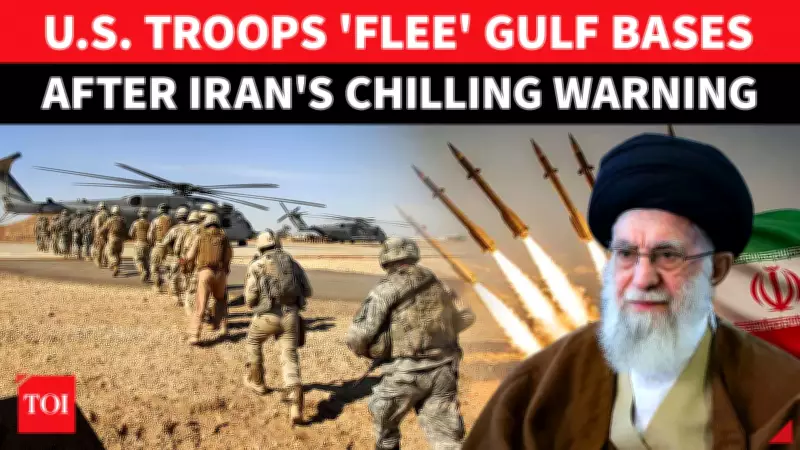
US Troops Forced to Exit Middle East Bases as Iran Launches Deadly Missile Amid War Alert
In a significant military repositioning, the United States has reportedly withdrawn hundreds of troops from Al Udeid Air Base, its largest military installation in the Middle East. This move comes as tensions with Iran intensify, with Tehran launching missiles and issuing stark warnings that have raised regional war alerts.
Strategic Withdrawal from Key Bases
According to a report by The New York Times, the troop withdrawal extends beyond Qatar's Al Udeid Air Base to include personnel from Bahrain, home to the U.S. Navy's critical Fifth Fleet. While American forces remain deployed across strategic locations such as Iraq, Syria, and other Gulf states, this repositioning is widely viewed as a precautionary measure in response to escalating threats.
Iran's Missile Launches and Dire Warnings
The timing of this military adjustment coincides with Iran's recent missile launches and explicit threats against American interests. Tehran has warned that any U.S. attack would render American bases "legitimate targets," creating concerns about broader regional escalation and unpredictable consequences that could destabilize the entire Middle East.

Regional Security Implications
This development marks a notable shift in U.S. military posture in a region where American presence has been substantial for decades. The withdrawal from Al Udeid Air Base, which serves as a crucial hub for U.S. Central Command operations, and from Bahrain, where the Fifth Fleet monitors maritime security in the Persian Gulf, underscores the seriousness of current tensions.
Military analysts suggest that while this repositioning reduces immediate vulnerability of concentrated American forces, it also signals Washington's assessment of heightened risks in the region. The situation remains fluid, with ongoing diplomatic efforts to de-escalate tensions while maintaining strategic military capabilities.
The broader implications extend beyond bilateral U.S.-Iran relations, potentially affecting regional alliances, energy security, and global geopolitical stability as other nations monitor these developments closely.