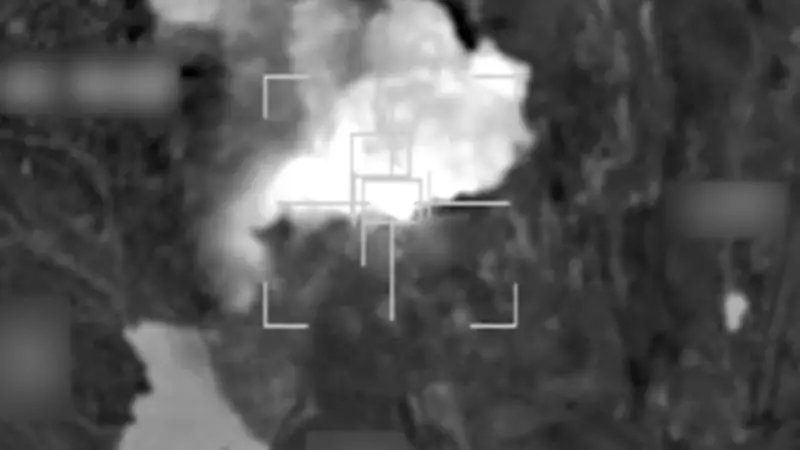
US Central Command Releases Footage of Precision Strikes on Iran's Underground Military Sites
The United States Central Command has publicly shared a video depicting the destruction of Iran's underground military targets through the use of precision munitions. This development occurs amid escalating hostilities in the Middle East, initiated by recent strikes from the United States and Israel targeting Iranian assets.
"US forces drop precision munitions on underground military targets deep inside Iran to further degrade the Iranian regime's ability to project power in meaningful ways beyond its borders," the US Central Command stated in a post on the social media platform X.
What Are Precision Munitions?
Precision munitions refer to weapons engineered to strike specific targets with high accuracy while minimizing collateral damage. In modern military terminology, they are closely associated with precision-guided munitions (PGMs), which the US Department of Defense defines as guided weapons intended to destroy point targets with exceptional precision.

Unlike traditional unguided munitions such as artillery shells or rockets, precision munitions can adjust their flight path post-launch to correct for errors caused by weather conditions, target movement, or initial aiming inaccuracies. This capability significantly enhances the likelihood of hitting the intended target.
These advanced weapons achieve their accuracy through sophisticated guidance technologies, including:
- Global Positioning System (GPS) receivers
- Laser seekers
- Inertial navigation systems
- Radar-based sensors
Such systems enable continuous tracking and trajectory refinement during flight, earning them the nickname "smart weapons" due to their dynamic responsiveness to changing conditions and improved strike effectiveness.
Over time, the concept of "precision" has evolved beyond mere guidance technology. As these technologies have become more widespread, precision now encompasses the entire operational system supporting their use. This includes:
- The quality of intelligence used for target identification
- The planning and decision-making processes behind deployment
- The operational context in which they are employed
Thus, contemporary precision munitions are understood not merely as guided weapons but as integral components of an integrated approach to achieving accurate and controlled military effects.
Types of Air-to-Surface Precision Missiles
Advanced Anti-Radiation Guided Missile–Extended Range (AARGM-ER): This missile is specifically designed to destroy enemy radar systems, particularly those controlling air defenses. By neutralizing radar capabilities, it enhances aircraft safety during operations. Launched from aircraft, upgraded versions offer extended range and improved threat response compared to older models.
Joint Air-to-Ground Missile (JAGM): Primarily utilized by attack helicopters, the JAGM targets ground assets such as tanks and vehicles. It replaces older missile systems by combining their features with enhanced targeting technology, offering greater accuracy, versatility across conditions, and compatibility with certain aircraft.
Joint Air-to-Surface Standoff Missile (JASSM): A long-range cruise missile enabling aircraft to strike targets from considerable distances, thereby keeping pilots out of harm's way. Newer iterations feature increased range and stealth capabilities to evade enemy detection and defenses.
Joint Direct Attack Munition (JDAM): This cost-effective kit converts conventional bombs into precision weapons by integrating GPS guidance. It allows for accurate target strikes even in adverse weather conditions and is widely adopted due to its affordability and ease of integration with existing bomb inventories.
Long Range Anti-Ship Missile (LRASM): Engineered to destroy enemy naval vessels, this missile can travel long distances and employs advanced sensors to identify and engage maritime targets in complex scenarios. It operates with limited guidance and can make autonomous decisions during flight.

Massive Ordnance Penetrator (MOP): A substantial bomb designed to obliterate deeply buried or heavily fortified targets like underground bunkers. Deployed from heavy bombers, it penetrates deep underground before detonating.
Small Diameter Bomb (SDB I and II): These compact yet highly accurate bombs enable aircraft to carry more ordnance. SDB I primarily targets stationary assets using GPS, while SDB II incorporates advanced sensors like radar and infrared to engage moving targets.
The release of this video underscores the ongoing military operations in the region, highlighting the technological sophistication of modern warfare and the strategic efforts to limit Iran's military capabilities. As tensions persist, such demonstrations serve as both tactical disclosures and psychological tools in the broader geopolitical landscape.