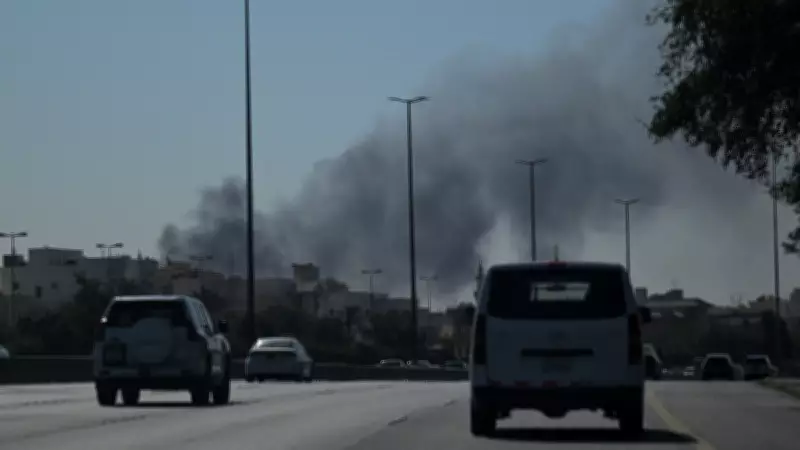
US Military Aircraft Crashes in Kuwait, All Crew Members Survive
In a significant incident in the Middle East, several United States warplanes have crashed in Kuwait, according to recent reports. The US Department of Defense confirmed that all crew members aboard the aircraft survived the crashes, which occurred under circumstances that are still under investigation. This event has raised concerns about military operations and safety in the region, particularly amid ongoing geopolitical tensions.
Iranian Media Releases Photo of Pilot from Downed F-15
Adding to the complexity of the situation, Iranian state media has released a photograph purportedly showing the pilot of a downed F-15 fighter jet. The image, which has been circulated widely, is claimed by Iran's Ministry of Defence to be evidence of their involvement in the incident. This claim has not been independently verified by international authorities, but it has sparked a wave of speculation and diplomatic reactions.
Details of the Crashes

The crashes involved multiple US warplanes, though the exact number and types of aircraft have not been officially disclosed. Initial reports suggest that the incidents took place in Kuwaiti airspace or near military bases used by US forces in the country. Kuwait, a key ally of the United States in the Gulf region, hosts several American military installations as part of broader security agreements.
Survival of Crew Members
In a positive development, all crew members from the crashed warplanes have been confirmed to have survived. Emergency response teams from both US and Kuwaiti forces were quickly deployed to the crash sites, conducting rescue operations that ensured no fatalities. The crew members are currently receiving medical evaluations, and their conditions are reported to be stable, with no serious injuries noted so far.
Iran's Claims and Regional Implications
The release of the pilot's photo by Iranian media marks a provocative move in the already tense relations between Iran and the United States. Iran's Ministry of Defence stated that the F-15 was downed as part of defensive actions, though this claim is being met with skepticism from US officials and international observers. Analysts suggest that this could be an attempt by Iran to project strength and influence in the region, especially given recent escalations in proxy conflicts and nuclear negotiations.
Investigation and Responses
An investigation into the causes of the crashes is underway, led by the US military in coordination with Kuwaiti authorities. Preliminary assessments are focusing on potential technical failures, human error, or external factors, but no conclusive findings have been released yet. The US Department of Defense has emphasized its commitment to transparency and safety, vowing to provide updates as more information becomes available.
In response to Iran's claims, US officials have issued statements urging caution and calling for verification of the facts. They have not confirmed the downing of an F-15 by Iranian forces, instead highlighting the need for diplomatic channels to address such incidents. Regional allies, including Kuwait and other Gulf states, are monitoring the situation closely, with concerns about potential spillover effects on regional stability.
Latest Updates and Future Outlook
As of the latest updates, the situation remains fluid, with ongoing investigations and diplomatic exchanges. The crashes have prompted a review of military protocols and airspace security in Kuwait, with discussions likely to involve enhanced coordination between US and Kuwaiti forces. Meanwhile, Iran's media campaign continues to fuel speculation, with experts warning of possible misinformation or propaganda efforts.
Key Points to Note:

- Multiple US warplanes crashed in Kuwait, with all crew surviving.
- Iran released a photo of a pilot from a downed F-15, claiming responsibility.
- Investigations are ongoing to determine the causes of the crashes.
- Diplomatic tensions are rising, with calls for verification and caution.
- The incident highlights broader security challenges in the Middle East.
This event underscores the volatile nature of military operations in conflict-prone regions and the importance of accurate reporting and international cooperation. As developments unfold, stakeholders are advised to rely on verified sources for information, given the potential for escalation in an already complex geopolitical landscape.