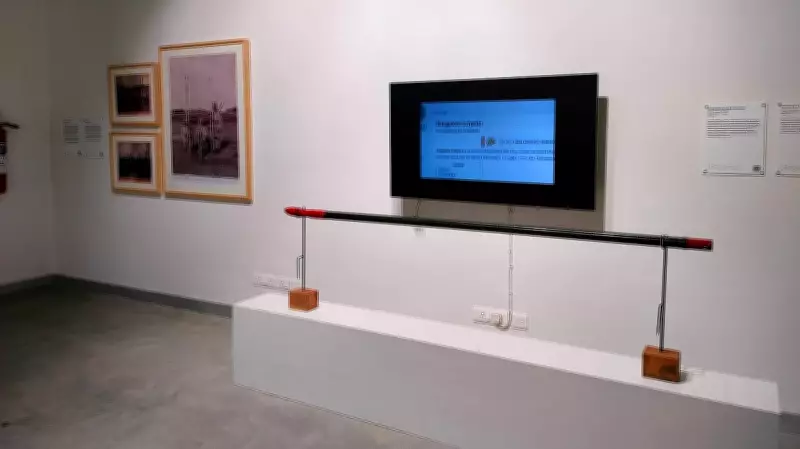
A military device developed in Bengaluru, India, played a crucial role in helping armies breach enemy defences during World War I, according to an article by Kanika Singh published on July 8, 2026.
The Device and Its Origins
The device, known as the Bangalore Torpedo, was invented in 1912 by Captain R.L. McClintock of the British Indian Army's Madras Sappers and Miners, based in Bengaluru. It was designed to clear barbed wire and minefields, enabling infantry to advance.
The Bangalore Torpedo consists of a series of metal tubes filled with explosives, which can be connected and pushed forward under enemy fire. It saw extensive use in the trenches of Europe during World War I.

Impact on World War I
The device was first used in combat in 1914 during the First Battle of Ypres. According to Singh's article, it became a standard tool for sappers and engineers on the Western Front. A cartoon from 1918 depicts Corporal Gawler winning his Military Medal using the Bangalore Torpedo.
"The Bangalore Torpedo was instrumental in breaking the stalemate of trench warfare," Singh writes. "It allowed soldiers to clear obstacles quickly and safely, saving countless lives."
Legacy and Modern Use
The Bangalore Torpedo remains in use today, with modern variants employed by military and civilian engineers for demolition and obstacle clearance. Its development in Bengaluru highlights India's contributions to global military technology.