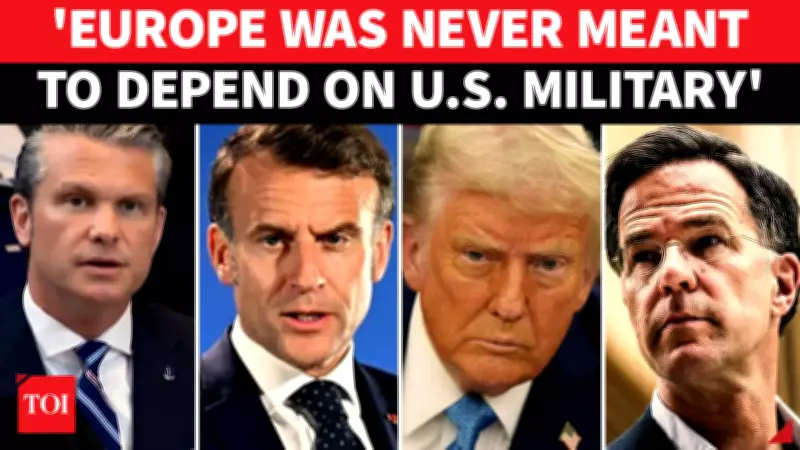
US War Secretary Pete Hegseth accused European allies of decades of military 'free-riding' on Thursday, unveiling a review that could reshape Washington's military presence across the continent. Addressing NATO defence ministers in Brussels, Hegseth called for a 'NATO 3.0' built on European military power rather than dependence on the United States.
Hegseth's Strong Message to NATO
"The Trump administration has said again and again in the last year and a half, our allies must step up. President Trump has been very clear on this point for many years in over two administrations. And for too long, NATO has been a paper tiger and a one-way street. No more," Hegseth said. He demanded that partners return NATO to a 'real military alliance', like the organisation that 'won the Cold War'.
Hegseth's comments come amid ongoing tensions between the US and its European allies over defense spending. Many NATO members have failed to meet the alliance's target of spending 2% of GDP on defense, leading to repeated criticism from Washington.

Implications for US Military Presence
The review announced by Hegseth could lead to a significant reduction in US troops stationed in Europe, as the Pentagon seeks to shift more responsibility to European nations. This move aligns with the Trump administration's broader strategy of reducing American military commitments abroad and encouraging allies to take on a greater burden.
European leaders have expressed concern over the potential withdrawal of US forces, which have been a cornerstone of NATO's defense posture since the Cold War. However, Hegseth emphasized that the US remains committed to the alliance, but expects Europe to contribute more.
Reactions from NATO Allies
Several NATO defense ministers acknowledged the need for increased spending but stressed the importance of maintaining transatlantic unity. Some European officials have privately expressed frustration with what they see as Washington's confrontational approach, while others agree that Europe must invest more in its own security.
Hegseth's speech marks a significant moment in NATO's history, as the US publicly calls for a fundamental shift in the alliance's structure. The coming months will be crucial in determining how Europe responds to this challenge.