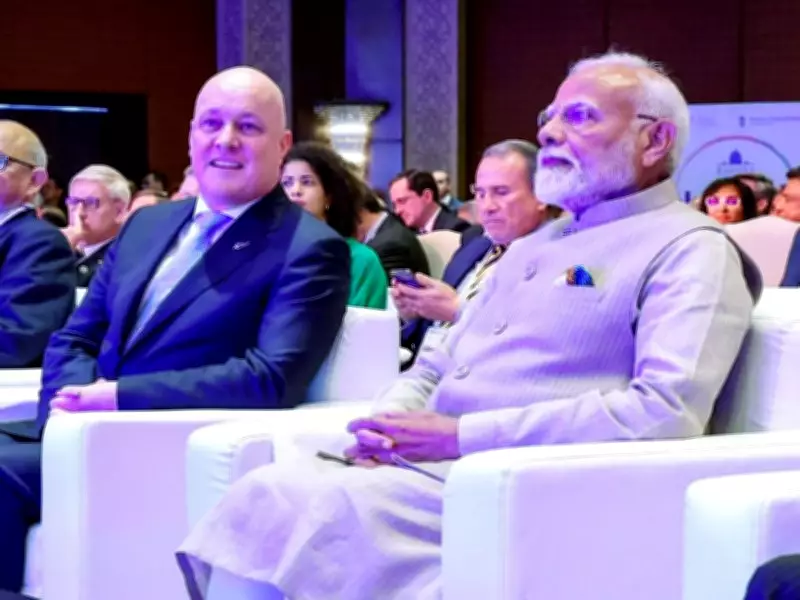
New Zealand Prime Minister Christopher Luxon announced on Friday that Indian Prime Minister Narendra Modi will make his first official visit to New Zealand next week. The announcement was made via a post on X, where Luxon expressed delight at the upcoming visit and emphasized the significance of the New Zealand-India Free Trade Agreement (FTA) signed in April 2026.
Free Trade Agreement to Boost Economic Ties
Luxon stated that the leaders are taking the bilateral relationship to the next level with the FTA, which is expected to deliver more jobs, higher exports, and stronger economic growth for New Zealand. He noted that India is one of the world's largest and fastest-growing economies, with a market of 1.4 billion people. The agreement will unlock new opportunities for New Zealand's goods and services exports, bringing more money into Kiwi communities, creating jobs, and lifting wages.
Details of the Free Trade Agreement
Earlier, on May 6, New Zealand Trade and Investment Minister Todd McClay told ANI that two-way trade between India and New Zealand is poised to double within a few years as both nations finalize the high-quality FTA. The agreement caters to New Zealand's consumers seeking high-quality goods and services available in the Indian market. The New Zealand government is committed to promoting up to USD 20 billion in investment into India over the next 15 years.

Special Desk for Investment Clearances
To facilitate this flow of capital, the Indian government agreed to establish a special New Zealand "single desk" to streamline and accelerate investment clearances. McClay explained that this would make it easier for New Zealanders to invest, as clearances can take place more quickly. The FTA, signed in April 2026, marks a historic milestone in bilateral economic relations. It is a comprehensive framework encompassing market access, agricultural productivity, investment, talent mobility, collaboration in sports, tourism, and people-to-people ties. The agreement is designed to benefit manufacturers, farmers, MSMEs, women entrepreneurs, students, and skilled professionals across both nations.