
World Bank: 2020s Risk Lost Decade for Developing Economies
World Bank warns that weak growth, rising debt, and global shocks may make the 2020s a 'lost decade' for many developing economies, with income convergence stalled.


World Bank warns that weak growth, rising debt, and global shocks may make the 2020s a 'lost decade' for many developing economies, with income convergence stalled.

The World Bank lowers its 2026 global growth forecast to 2.5%, citing Middle East conflict-driven energy shocks, inflation, and weaker prospects for most economies.
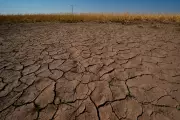
US weather agencies confirm El Niño transition, with 63% chance of a 'very strong' event by Nov-Jan, potentially one of the strongest since 1950, impacting global weather and India's monsoon.

US stock markets rose on Thursday, led by a rebound in technology and AI stocks, while investors monitored Middle East tensions, inflation, and ECB rate hike.

Shared lists with real-time sync. No signup needed — just open and shop together.
Recommended
The World Bank lowered its 2026 global growth forecast to 2.5%, citing Middle East conflict, rising energy prices, and market uncertainty. India remains the fastest-growing major economy with 6.6% GDP growth projected for FY 2026-27.

A report by USIBC and Grant Thornton Bharat highlights deeper hydrocarbon cooperation as vital to achieving the India-US $500 billion bilateral trade target by 2030, urging expanded investment and technology collaboration.

Wall Street indexes traded mixed as tech stocks slumped, Iran tensions rose, and Fed rate cut expectations faded, with inflation data offering little relief.

China's crude imports from Iran fell sharply in May 2025, reducing global supply disruption from the Strait of Hormuz closure. Weaker demand, EV adoption, and record stockpiles drive this trend.
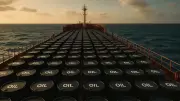
Fitch Ratings forecasts Brent crude at $87 per barrel in 2026, expecting the Strait of Hormuz to reopen by July, easing global crude supplies.
Shared lists with real-time sync. No signup needed — just open and shop together.
Recommended
IATA forecasts global SAF production at 2.4 million tonnes in 2026, only 0.8% of aviation fuel, underscoring challenges to net-zero goals. Airlines will spend $4.3 billion on SAF this year.

Despite a blockade at the Strait of Hormuz removing over 10 million barrels daily, oil prices remain below $100 due to US exports, weaker Chinese demand, and alternative routes.

A study reveals biodiversity loss could increase annual debt servicing costs by $49 billion in India and $70 billion in China, highlighting systemic economic risks.

The European Union has flagged 365 Indian products, including herbs, spices, fruits, and vegetables, for containing pesticides and heavy metals above permissible limits.

Rising crude oil prices due to West Asia tensions and Strait of Hormuz disruptions push up fuel and essential commodity prices in Patna, straining household budgets.
Shared lists with real-time sync. No signup needed — just open and shop together.
Recommended
US Representative Mike Thompson clashed with Treasury Secretary Scott Bessent over his 'golden age economy' claims, highlighting rising costs for essentials and pressing on inflation, tax policies, and IRS allegations.

Amazon shifts Prime Day to June 23-26, citing FIFA World Cup and US Independence Day. The four-day event aims to boost grocery sales amid competition with Walmart.

India and the UK discussed key issues delaying the India-UK CETA implementation, including UK's steel safeguard measures and carbon border tax, which could impact Indian exports worth USD 775 million.

Severe weather at Indore airport diverted flights and caused delays. Air India also halved its daily Indore-Delhi flights from June 1, citing fuel costs.

The US has withdrawn 50 million barrels from its Strategic Petroleum Reserve since the Iran conflict began, pushing stockpiles toward 1980s lows and sparking debate over energy security.
Shared lists with real-time sync. No signup needed — just open and shop together.
Recommended
UAE fuel prices for June 2026 rise to near 4-year highs, with Super 98 at Dh3.95/litre. Diesel drops to Dh4.33. Prices up over 60% since February.

An average Indian can buy only 8 litres of petrol with daily income, while Americans can buy 199 litres. India ranks 121st globally in petrol affordability.

Galgotias University hosted a vibrant celebration of Goa Statehood Day, showcasing Goan culture, music, and heritage through performances and cuisine.

India's consumption faces a near-term slowdown due to predicted El Nino-weakened monsoon, lowest in 11 years, impacting rural demand and sales of various products.

Russian President Vladimir Putin announced intensified trade liberalisation talks with India, aiming to boost bilateral trade and economic cooperation between the two nations.
Shared lists with real-time sync. No signup needed — just open and shop together.
Recommended
The IEA's World Energy Investment 2026 report warns that the West Asia conflict is reshaping global energy strategies, boosting diversification and infrastructure investment.

The US economy grew at a 1.6% annual rate in Q1 2026, down from the 2% initial estimate, due to downward revisions in consumer spending and investment, as per Commerce Department data.

US inflation accelerated to 3.8% in April, highest since May 2023, driven by rising fuel and food prices amid economic fallout from Trump's Iran war.

Inflation and higher fuel costs are dividing America's summer travel market between affluent and cost-conscious travelers, with airfare up 20% and budget-conscious households cutting back.

A new survey reveals that half of US workers would quit within 3 months if they had savings for a year, highlighting financial insecurity as the key driver of retention, not loyalty.
Shared lists with real-time sync. No signup needed — just open and shop together.
Recommended
Britain's record May heatwave sparks political debate as Conservatives vow to reverse net-zero regulations banning air-conditioning in new homes, citing productivity and health concerns.
