

Asian Markets Exhibit Mixed Trends Amid Currency and Geopolitical Factors
Global financial markets presented a varied picture on Monday, with Asian indices trading in mixed territory as investors carefully evaluated ongoing geopolitical developments and currency movements. The trading session highlighted divergent performances across major regional benchmarks, reflecting the complex interplay of economic signals and international relations.
Japanese Markets Under Pressure from Yen Appreciation
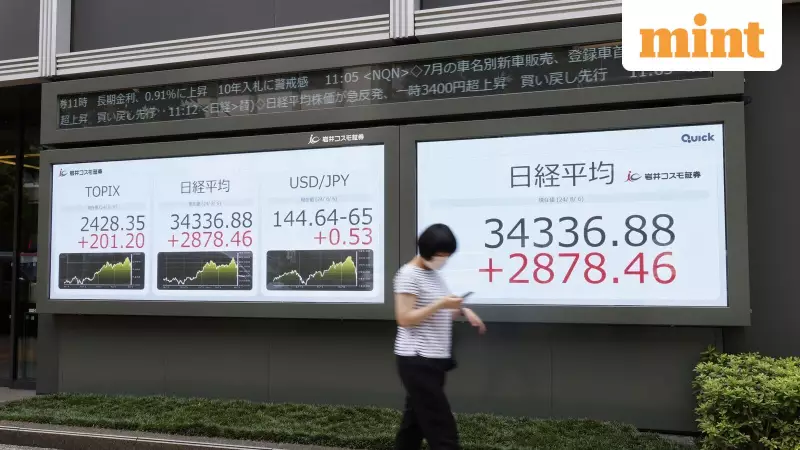
Japan's equity markets experienced notable declines, with the Nikkei 225 index dropping by 1.92% and the Topix index falling by 1.76%. This downward movement was primarily attributed to a strengthening yen, which reached a high of 153.915 per dollar—its strongest position in over three months. The currency's appreciation followed what appeared to be intervention signals that caused a significant spike on Friday, with gains continuing throughout the trading day.
Market participants remained particularly attentive to Japanese stocks and the yen after Prime Minister Fumio Kishida expressed readiness to address speculative market activities in response to the currency's rapid rise. Officials have warned they are prepared to intervene should volatility increase further. An appreciating yen typically reduces international earnings for Japan's major exporters, creating additional pressure on corporate profitability and investor sentiment.

Regional Market Performance Highlights
Across the Asia-Pacific region, market performance showed considerable variation:
- South Korea's Kospi declined by 0.60%, reflecting cautious investor sentiment
- Hong Kong's Hang Seng index decreased by 0.18%, showing modest weakness
- Mainland China's CSI 300 bucked the trend with a gain of 0.27%, demonstrating resilience
- Australia's S&P/ASX 200 recorded a slight increase of 0.13%, maintaining positive territory
This mixed performance underscores how different economies and markets are responding to the current global economic environment with varying degrees of sensitivity to external factors.
Geopolitical Developments Influence Market Sentiment
Beyond currency movements, geopolitical considerations played a significant role in shaping market dynamics. Canadian Prime Minister Mark Carney's declaration on Sunday that Canada does not intend to pursue a free trade agreement with China added another layer of complexity to international trade relations. This statement came after US President Donald Trump cautioned about implementing 100% tariffs on Canada if it proceeded with a trade deal with China, highlighting the intricate web of global trade negotiations and their potential market implications.
US Market Performance Provides Context
The mixed Asian trading followed a similarly varied session on Wall Street, where US stock indices closed with divergent results on Friday. The tech-centric Nasdaq Composite continued its upward momentum with a 0.28% gain to close at 23,501.24, benefiting from easing geopolitical tensions. In contrast, the Dow Jones Industrial Average declined by 285.30 points (0.58%) to finish at 49,098.71, weighed down by a nearly 4% drop in Goldman Sachs shares.
The broader S&P 500 index showed minimal movement with a slight 0.03% increase, closing at 6,915.61. This performance pattern suggests that different market sectors are responding differently to the current economic and geopolitical landscape, with technology stocks showing relative strength while traditional industrial components face greater pressure.
Market Outlook and Considerations
As markets navigate these complex dynamics, investors are likely to remain focused on several key factors:

- The trajectory of the Japanese yen and potential currency intervention measures
- Evolving geopolitical relationships and their impact on global trade patterns
- Sector-specific performance trends, particularly in technology versus traditional industries
- Regional economic resilience in the face of international uncertainties
The current market environment underscores the importance of careful analysis and diversified investment approaches as global financial systems respond to multiple simultaneous pressures. Market participants will continue monitoring these developments closely for indications of broader trends that could influence investment strategies in the coming weeks.





