

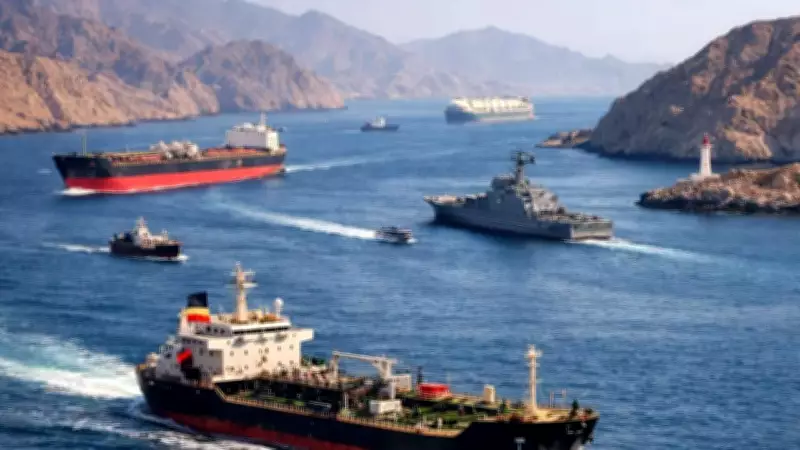
Strait of Hormuz Blockade Ignites Global Oil Market Turmoil
The narrow and strategically crucial Strait of Hormuz has become the epicenter of a severe shock to global energy markets as the military conflict between the United States, Israel, and Iran intensifies. This vital maritime artery, which normally facilitates about one-fifth of the world's oil and liquefied natural gas shipments, is now effectively blocked, triggering widespread disruptions across the energy sector.
Strategic Waterway Paralyzed by Conflict
The Strait of Hormuz, situated between Iran and Oman, serves as the primary conduit for crude oil exports from major Gulf producers like Saudi Arabia, Iraq, and Kuwait to markets in Asia, Europe, and North America. However, the escalation of hostilities, beginning with joint US-Israeli strikes on Iranian targets on February 28, 2026, has dramatically slowed tanker movement. Security risks have compelled many vessels to avoid the corridor entirely, with several tankers reportedly attacked since the conflict commenced.
Currently, hundreds of ships are anchored on both sides of the waterway, as shipping companies and oil traders await indications that safe navigation can resume. This paralysis has forced top Middle Eastern producers to reduce output at their oilfields, as storage facilities across the region near capacity after nearly ten days of shipping disruptions. Once these tanks fill, producers may have no alternative but to halt production, potentially tightening global oil supply sharply if exports do not restart soon.

Energy Infrastructure Under Direct Attack
The conflict has also inflicted damage on key energy infrastructure throughout the Gulf region. Refineries have been directly targeted, exacerbating supply constraints. For instance, the 380,000-barrel-per-day Sitra refinery in Bahrain, operated by Bapco Energies, was struck and declared force majeure earlier this week. Similarly, Saudi Aramco shut its largest refinery at Ras Tanura, which also hosts the kingdom's biggest marine export terminal, following a drone strike from Tehran.
These attacks have further limited the region's capacity to process and export fuel products. Even Kuwait's massive Al Zour Refinery, which processes approximately 615,000 barrels per day and supplies jet fuel to Europe and Africa, has been affected due to blocked shipping routes. Repairing damaged infrastructure and restarting production could take weeks, even if hostilities subside soon.
Global Emergency Measures and Price Surges
With global supplies tightening rapidly, the International Energy Agency is preparing an emergency response, expected to recommend releasing around 400 million barrels of oil from strategic reserves—the largest such move in its history. However, spare production capacity may be insufficient to fully offset the disruption if the Strait of Hormuz remains closed.
Energy prices have already surged sharply since the conflict began. Oil briefly climbed to about $119 per barrel earlier this week, the highest level since 2022, as traders reacted to the supply disruption. Although prices later eased slightly, analysts warn that prolonged disruption could drive crude significantly higher. The impact extends beyond crude oil, with prices for gasoline, diesel, jet fuel, natural gas, petrochemicals, fertilizers, and electricity all rising sharply, according to Reuters reports.
Asia Faces Heightened Vulnerability
Asian economies are considered the most vulnerable to supply disruptions from the Strait of Hormuz, as many rely heavily on imports of crude oil, liquefied natural gas, and refined fuel from the Middle East. Governments across the region are scrambling to manage the impact. China has instructed refiners to halt fuel exports to secure domestic supply, while South Korea has imposed price caps on fuel for the first time in three decades. Bangladesh has temporarily shut universities in an effort to conserve electricity and fuel.

Limited Alternatives and Economic Strain
Some Gulf producers have limited options to bypass the strait using pipelines. Saudi Arabia has been pumping crude through its East-West pipeline to the Red Sea port of Yanbu, which can transport up to 5 million barrels per day, though it rarely loads more than 2.5 million. The United Arab Emirates operates the Abu Dhabi Crude Oil Pipeline, capable of carrying about 1.5 million barrels per day to Fujairah on the Gulf of Oman. However, these pipelines cannot fully replace the massive volumes normally passing through the strait.
Higher fuel costs are pushing up inflation and increasing the cost of producing and transporting goods. Food prices are also rising as fertilizer and transportation costs climb, affecting farmers preparing for the planting season in the Northern Hemisphere. Businesses across sectors, from aviation to manufacturing, are experiencing rising operating costs.
India's Economic Exposure to Oil Shock
Among major economies, India is particularly vulnerable to an oil shock. The country imports nearly 90% of its crude oil and about half of its natural gas needs, with over 40% of crude imports originating from the Middle East. India's oil reserves cover only about 20 to 25 days of consumption, and persistent high oil prices could exert significant economic pressure.
According to Reuters, economists estimate that an average crude price of $100 per barrel could widen India's current account deficit to between 1.9% and 2.2% of GDP in the 2026-27 financial year. If oil prices rise to around $120 per barrel, the deficit could expand to roughly 3.1% of GDP. Higher import costs have already pushed the rupee to record lows, forcing the central bank to sell dollars from its reserves to stabilize the currency.
High oil prices could also increase government spending substantially. Estimates by Mumbai-based Elara Securities suggest federal expenditure could rise by around 3.6 trillion rupees ($39 billion) next year if oil prices average $100 per barrel. Maintaining India's fiscal deficit target of 4.3% of GDP for 2026-27 while absorbing higher energy costs might compel the government to cut spending in other areas, such as infrastructure investment.
India's economy is projected to grow more than 7% in the coming financial year, but if oil prices remain near $100 per barrel throughout the year, growth could slow to about 6.6% while inflation could rise to around 4.1%, according to a State Bank of India report.
Long-Term Strain on Energy Supply Chains
Even if the conflict ends soon, restoring normal operations across the region's energy infrastructure will require time. Damaged refineries need repairs before resuming full output, and facilities like QatarEnergy's LNG operations could take several weeks to ramp up after a complete shutdown. Oilfields that have scaled back production will also need time to stabilize, with potential lasting drops in output due to loss of reservoir pressure.
For now, global markets remain on edge as shipping firms, oil producers, and governments closely monitor the situation for any signs that traffic through the strategic corridor could resume. Until then, the disruption risks keeping energy prices elevated and adding further strain to economies worldwide.





