

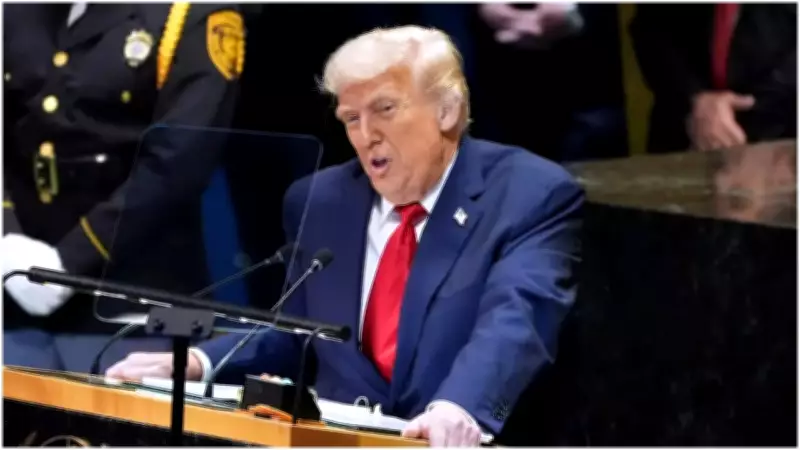
Trump Announces New Tariff Strategy Following Supreme Court Setback
In a significant development for international trade policy, US President Donald Trump declared he would sign new executive orders aimed at restoring tariffs through alternative legal authorities. This announcement comes directly after the Supreme Court struck down a substantial portion of his previous tariff measures, creating a legal and diplomatic challenge for the administration.
Immediate Actions and Legal Authorities Cited
Speaking shortly after the court's ruling, President Trump outlined his administration's planned response. He stated he would rely on a specific set of trade powers known as Section 122 to implement a comprehensive global tariff of 10% across all imported goods. This move would be in addition to existing standard tariffs already in place.
"Effective immediately, all national security tariffs under Section 232 and all existing Section 301 tariffs remain fully in place and in full force and effect," Trump emphasized during his remarks. "I will sign an order to impose a 10% global tariff under Section 122 over and above our normal tariffs."

Furthermore, the administration plans to utilize another provision, Section 301, to initiate investigations into what it characterizes as unfair foreign trade practices. This investigative process could potentially lead to the imposition of additional targeted tariffs against specific countries or industries.
Global Trade Implications and Uncertainty
The Supreme Court's decision against Trump's previous tariff framework has injected considerable uncertainty into existing trade agreements with major economic partners. Countries including China, Canada, and the United Kingdom now face a shifting landscape that may necessitate renegotiations or legal challenges.
This judicial ruling could significantly disrupt ongoing trade negotiations and affect international diplomatic relations. Nations worldwide may be compelled to reassess their strategic positions and recalibrate their approaches to dealing with the United States on trade matters. The potential for retaliatory measures and trade disputes has increased substantially.
Understanding the Legal Framework: Section 122
Section 122 of the Trade Act of 1974 grants presidential authority to impose tariffs of up to 15% to address what the statute defines as "large and serious" balance-of-payments deficits, which are closely linked to trade deficits. However, this authority comes with an important limitation: any tariffs implemented under Section 122 can remain effective for only 150 days unless Congress specifically votes to extend them.
In the immediate term, this proposed move would not represent a dramatic departure from the baseline 10% global tariff that Trump previously imposed, nor from the 15% tariff he secured through trade agreements with various nations over the past year. The distinction lies in the legal justification and potential duration of these measures.
National Security Tariffs: Section 232
Section 232 originates from the Trade Expansion Act of 1962 and authorizes the imposition of tariffs or import quotas on goods that threaten national security. President Trump previously invoked this authority in 2018 to implement 25% tariffs on steel imports and 10% tariffs on aluminum imports.
These Section 232 tariffs affected numerous trading partners including Canada, Mexico, the European Union, and several other countries. Importantly, these national security tariffs remain fully operational following the Supreme Court ruling, as they operate under separate legal authority from the emergency powers challenged in court.
Addressing Unfair Practices: Section 301
Section 301 constitutes another component of the Trade Act of 1974, providing authority to impose tariffs in response to unfair foreign trade practices. These practices encompass intellectual property theft, forced technology transfers, discriminatory measures against US companies, and other anticompetitive behaviors.

President Trump has extensively applied Section 301 tariffs against China, reaching rates of 25% on hundreds of billions of dollars worth of Chinese goods. The primary objective of these measures has been to target and counteract what the administration views as systematic anticompetitive behavior by foreign trading partners.
The intersection of these three legal authorities—Section 122 for balance-of-payments issues, Section 232 for national security concerns, and Section 301 for unfair trade practices—creates a complex web of potential tariff actions that could reshape global trade dynamics in the coming months.





