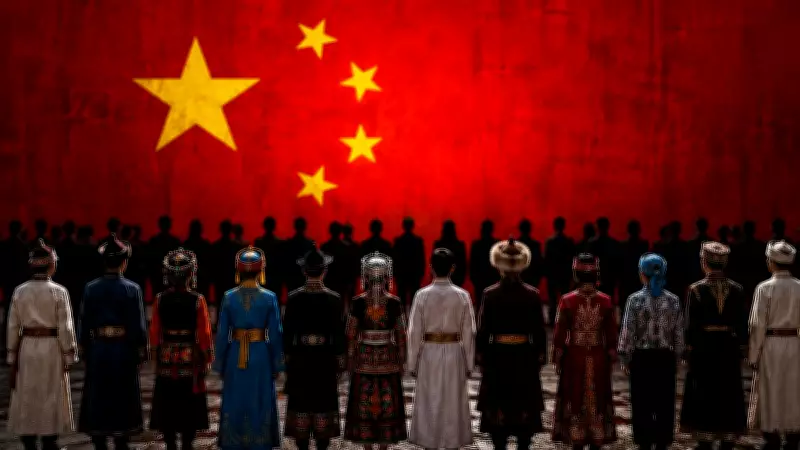
China's new law, in force from July 1, 2026, codifies a 'unified' national identity, further enforcing the forced assimilation of the 56 officially recognized ethnic groups, according to analysts and rights groups. The legislation mandates a single, state-defined identity that overrides distinct ethnic cultures, languages, and traditions.
Key Provisions of the Law
The law requires all citizens to prioritize a unified Chinese identity over their ethnic heritage. It promotes Mandarin as the sole language in public life and education, while discouraging the use of minority languages like Tibetan and Uyghur. Schools must teach a standardized curriculum that emphasizes national unity over ethnic diversity.
According to Parul Chandra's analysis in the original article, the law also restricts ethnic cultural practices that are deemed 'divisive' or 'separatist.' Authorities can penalize individuals or groups who promote ethnic distinctiveness, with fines or re-education programs.

Impact on Tibetans and Uyghurs
Rights groups have condemned the law, stating it targets Tibetans and Uyghurs in particular. 'This is a systematic erasure of our identity,' said a Tibetan activist speaking on condition of anonymity. The law follows years of crackdowns in Xinjiang and Tibet, including surveillance, forced labor, and cultural suppression.
Statistics from the original report indicate that over 20 million people belong to ethnic minorities in China. The new law affects all 56 groups, including Mongols, Zhuang, and Hui, but the most severe impact is felt in regions with strong separatist movements.
Global Reactions
International organizations, including the United Nations, have expressed concern. A UN spokesperson stated that the law 'contradicts international human rights standards on cultural autonomy.' China's government, however, defends the law as necessary for 'social stability and national unity.'
China's official media has praised the law, calling it a step toward 'harmonious development.' But critics argue it is a tool for political control. The law took effect on July 1, coinciding with the anniversary of the Chinese Communist Party's founding, underscoring its ideological significance.
Historical Context
China has long promoted the concept of a 'Chinese nation' (Zhonghua Minzu) encompassing all ethnic groups. This law codifies that concept into enforceable legal terms. Previous policies encouraged assimilation through migration and economic incentives, but this law makes it a legal obligation.
Experts predict the law will accelerate the decline of minority languages and cultures. 'Within a generation, many of these languages could vanish,' said a linguist from Beijing University, who requested anonymity due to the sensitivity of the topic.