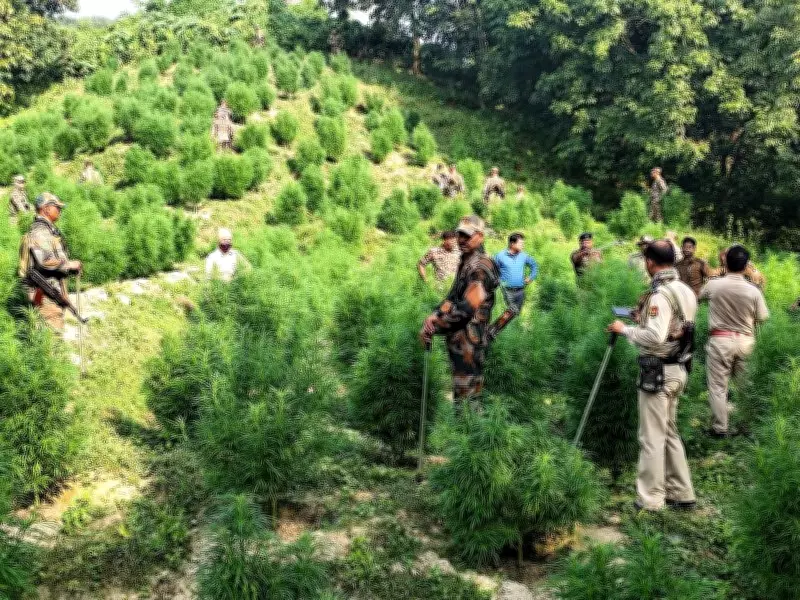
The Gandaki Province Assembly in Nepal unanimously passed a bill on Thursday legalizing the cultivation of marijuana for medicinal and industrial purposes, establishing a regulated framework for cannabis farming and commercial production within the province.
Bill Details and Unanimous Approval
The legislation, titled "Bill related to management of regulation of marijuana farming for medicinal and industrial purposes," was introduced by Gandaki Province Minister of Industry and Tourism Yasodha Rimal. It had previously undergone discussions and amendments in the Provincial Assembly's Finance and Development Committee before being presented to the full house.
Assembly Speaker Krishna Prasad Dhital announced the passage, stating that all proposed amendments were unanimously approved. "The honourable members in favour of this proposal say 'yes'. Those members who are in opposition say 'no'. The voice against the Bill isn't heard; therefore, I declare that the amendments mentioned from serial number one to twenty-eight regarding the regulation have been unanimously endorsed," Dhital said.

Regulated Cultivation Framework
Under the new law, marijuana cultivation is permitted only in areas designated by the provincial government, subject to prior approval and strict official supervision. The legislation mandates that tetrahydrocannabinol (THC) content in cultivated marijuana must remain below three percent. Individuals and organizations seeking to cultivate cannabis must obtain prior approval, and mandatory chemical testing of cannabis products is required before sale or use. The provincial government may establish a laboratory or collaborate with relevant institutions for testing.
Minister Rimal highlighted the province's suitability for cannabis cultivation, stating, "The geography and climate of the Gandaki Province are favourable for marijuana cultivation and production. It has the capability to adapt to the widely discussed and emerging challenge of climate change with continued production and doesn't require a large volume of water... It also requires less human effort but gives more yields, and in the present scenario where the lands are left barren, it can be utilised for its cultivation." She also noted that the crop is secure from monkeys that damage other crops and requires no pesticides, making it suitable for all 11 districts of the province.
Prevention and Rehabilitation Provisions
The legislation includes provisions for marijuana abuse prevention, treatment, and rehabilitation services. The Finance and Development Committee conducted extensive consultations with experts, local government representatives, and stakeholders before finalizing the bill, incorporating suggestions received during the review process.
Historical Context
Nepal outlawed personal consumption and sale of marijuana in 1976. Under existing laws, cannabis-related offences can attract prison terms ranging from one month to up to 10 years, depending on the quantity involved. While Nepal's Ministry of Home Affairs has been working on standard operating procedures to regulate limited consumption under specific conditions, no formal framework has been implemented so far.