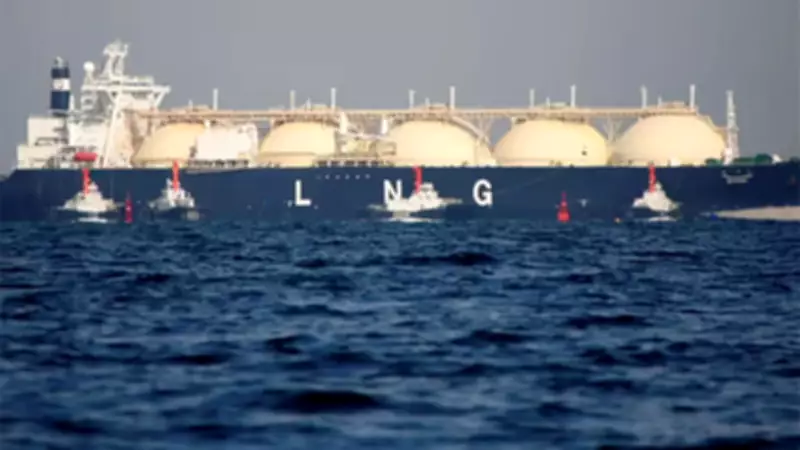
Energy shipments in the Gulf have resumed sailing after the United States and Iran signed an interim agreement, ending months of disruptions to the Strait of Hormuz. Activity has finally resumed, with a liquefied natural gas (LNG) loaded tanker now moving towards the strategic waterway.
Resumption of LNG Exports from Qatar
The reopening of the waterway is expected to help restore LNG exports from Qatar. According to ship-tracking data, the Mraikh, a tanker chartered by QatarEnergy, has begun heading towards the Strait after remaining in the Persian Gulf since February. The vessel loaded a cargo earlier this month and is expected to dock at Pakistan's Port Qasim, according to Bloomberg.
Qatar is seeking to bring back most of its LNG export capacity within two months of the Strait reopening. However, doing so will depend on the availability of vessels, as no empty LNG tanker has entered the Persian Gulf since the conflict erupted in late February.

Impact on Pakistan's Energy Shortage
For Pakistan, the voyage could help ease a gas shortage that emerged after LNG supplies from Qatar were cut off. The country is currently seeking an LNG cargo through a tender process, though that tender may be cancelled if the Mraikh arrives.
Pakistan had earlier held discussions with Tehran regarding the safe passage of LNG tankers to address its energy shortfall. It is not immediately clear whether the Mraikh is travelling under such an arrangement.
Details of the US-Iran Agreement
US President Donald Trump said he had signed an agreement with Iran that calls for the reopening of the Strait of Hormuz, a route critical to global oil and gas trade. The closure of the passage had restricted access to roughly a fifth of global LNG supplies, with only a limited number of vessels making the journey, either with Tehran's approval or after switching off their transponders to conceal their locations.
The agreement, signed on Wednesday, requires Tehran to dilute its stockpile of highly enriched uranium and waives US-backed sanctions on Iran, allowing the country to resume oil sales. It also provides for a permanent end to hostilities and launches a 60-day negotiating period aimed at securing a final agreement on Iran's nuclear programme. While announcing the deal, Trump indicated that the possibility of renewed attacks remains open.
Pakistani Prime Minister Shehbaz Sharif, who helped mediate the accord, said in a post on X that the deal takes immediate effect following its signing by leaders from both countries.
Terms of the Strait Reopening
Draft documents released by the two sides show that ships will be allowed to pass through the Strait of Hormuz without tolls for two months, although the agreement leaves open the possibility of charges being introduced later. In exchange, Washington will move to waive, but not entirely remove, some of the broad sanctions imposed on Iran.
This comes after the Middle East has been embroiled in a conflict for over 100 days now, disrupting energy supplies around the globe, sending ripples across economies.