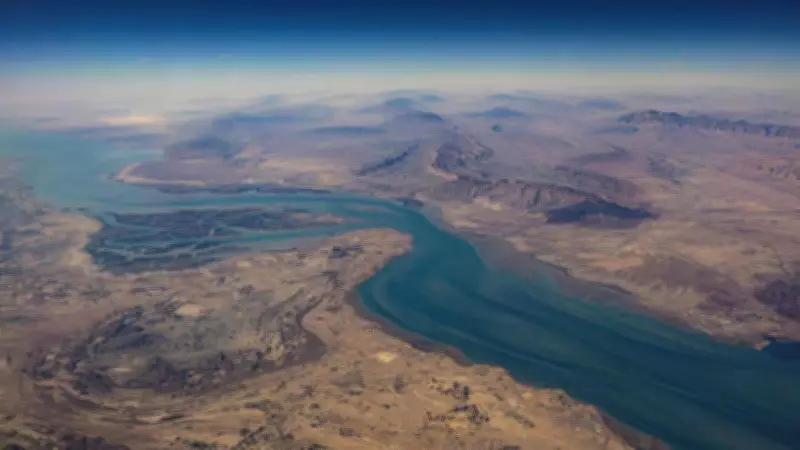
Iran on Saturday closed the Strait of Hormuz again after Israeli strikes in Lebanon killed at least 26 people, threatening the memorandum of understanding (MoU) it had digitally signed with the United States to negotiate the terms of a truce.
The move marked a sharp reversal from Friday's ceasefire arrangement, under which Iran had agreed to waive planned transit fees for vessels using the strait during a 60-day negotiation period under the MoU signed with the United States.
"It is hereby announced that the Strait of Hormuz will be closed to vessel traffic; It is noted that this first step is a response to the enemy's breach of promise, and if the aggression continues, further steps will be planned and taken to force the enemy to comply with its obligations," said the Khatam-al Anbiya Central Headquarters in a statement carried by state TV.

Before the closure, ships seeking passage through the strait while the interim agreement remained in force were required to submit transit requests at least 48 hours before arrival.
Meanwhile, United States vice president JD Vance said he was confident the ceasefire could hold, adding that there was no evidence Iran was closing the Strait of Hormuz.
The closure came amid renewed uncertainty over the broader Iran deal. Israel and the Hezbollah militant group had agreed on Friday to halt attacks on each other after talks between the US and Iran were called off due to intense fighting in southern Lebanon, which deepened doubts over the initial agreement aimed at ending the war involving Iran.
The apparent truce followed a heavy exchange of fire that killed 47 people in southern Lebanon and four Israeli soldiers.
Even as Iran and the US signed a document to negotiate an end to the war, Israel appeared unfazed by the deal, continuing its strikes on Hezbollah targets across Lebanon that killed more than 20 people and pushed the agreement to the brink of collapse.
Late on Friday, Israeli Prime Minister Benjamin Netanyahu wrote on X that, on his orders, the military had "struck powerfully" 150 Hezbollah targets, killing dozens of militants.
Military spokesperson Brig. General Effie Defrin said the armed forces had not received any different instructions from the government. He said Israeli troops were operating in a "forward defence zone" and would continue to do so.
Hours after officials briefed journalists about the truce, Israeli artillery fire could still be heard from northern Israel along the Lebanese border, while a large explosion was seen inside Lebanon.
Hezbollah and Israel had reduced their attacks after Iran and the US reached an agreement to halt the war on "all fronts", including Lebanon.
The conflict between Israel and the Iran-backed militant group remains the most fragile element of the Iran deal. Neither Israel nor Hezbollah signed the agreement, although it was intended to bring an end to hostilities between them. Iran had also signalled its willingness to risk renewed conflict in the region to protect its interests in Lebanon and its most significant regional ally.
Catch the latest world news and top headlines. Download the TOI App.
About the Author
TOI World Desk
At TOI World Desk, our dedicated team of seasoned journalists and passionate writers tirelessly sifts through the vast tapestry of global events to bring you the latest news and diverse perspectives round the clock. With an unwavering commitment to accuracy, depth, and timeliness, we strive to keep you informed about the ever-evolving world, delivering a nuanced understanding of international affairs to our readers. Join us on a journey across continents as we unravel the stories that shape our interconnected world.