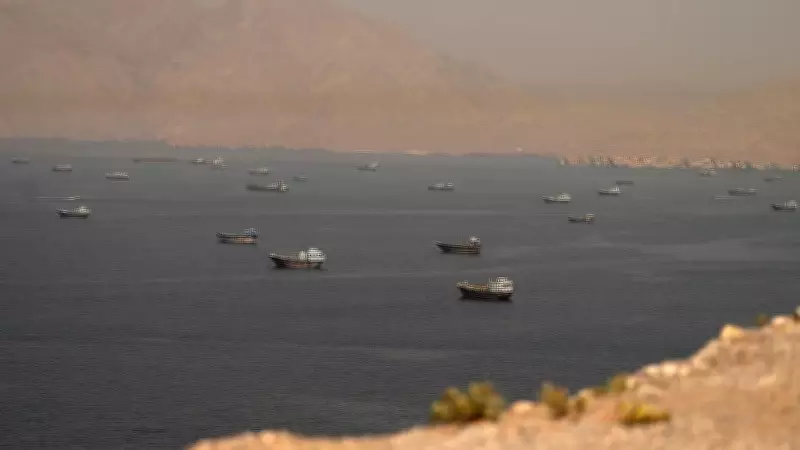
Iran Closes Strait of Hormuz Amid Ongoing Tensions
Iranian military forces announced the closure of the strategic Strait of Hormuz on June 20, 2026, a move that threatens global oil shipments and maritime trade. The announcement came despite a previous agreement between the United States and Iran that stipulated an end to hostilities on all fronts, including Lebanon.
Details of the Closure
The Iranian Revolutionary Guard Corps (IRGC) declared the waterway, through which about 20% of the world's oil passes, as closed to all commercial and military vessels. According to state media, the decision was made in response to what Iran described as "hostile actions" by US naval forces in the region. The closure was announced via a statement on the IRGC's official website, citing the need to protect national security interests.
Impact on Global Trade and Oil Markets
The Strait of Hormuz is a critical chokepoint for oil tankers from Saudi Arabia, Iraq, Kuwait, the UAE, and other Gulf producers. Analysts estimate that a prolonged closure could spike oil prices by 30-50%, potentially triggering a global economic slowdown. Shipping companies have already begun rerouting vessels around the Cape of Good Hope, adding weeks to transit times and increasing costs. The International Energy Agency (IEA) has warned of potential supply disruptions.

US-Iran Deal Under Strain
The closure directly contradicts the terms of the US-Iran agreement, which was brokered earlier this year and included commitments to de-escalate military activities across the region. A US State Department spokesperson called the closure "a flagrant violation of the deal" and warned of "serious consequences." Iran, however, maintains that the agreement does not restrict its right to control its territorial waters. The UN Security Council has scheduled an emergency session to address the crisis.
Regional Reactions
Saudi Arabia and the UAE have condemned the closure, urging international intervention. The Gulf Cooperation Council (GCC) described it as "an act of economic warfare." Meanwhile, Iraq, which relies on the strait for oil exports, has called for dialogue. Russia and China have not directly condemned Iran but have called for restraint and a return to negotiations.
Military Posturing
In response, the US Navy's Fifth Fleet, based in Bahrain, has heightened its alert status. Reports indicate that US aircraft carriers and destroyers are positioning near the strait, raising fears of a direct confrontation. Iran has deployed anti-ship missiles and fast-attack boats along the coast, while the IRGC has conducted live-fire drills in the area. Experts warn that any miscalculation could lead to a broader conflict.
Historical Context
The Strait of Hormuz has been a flashpoint for decades. Iran has threatened to close it in the past during periods of tension, including the Iran-Iraq War and the 2019 US drone strike. However, this is the first time it has actually implemented a full closure. The move is seen as a major escalation in the ongoing rivalry between Iran and the US-led coalition.