

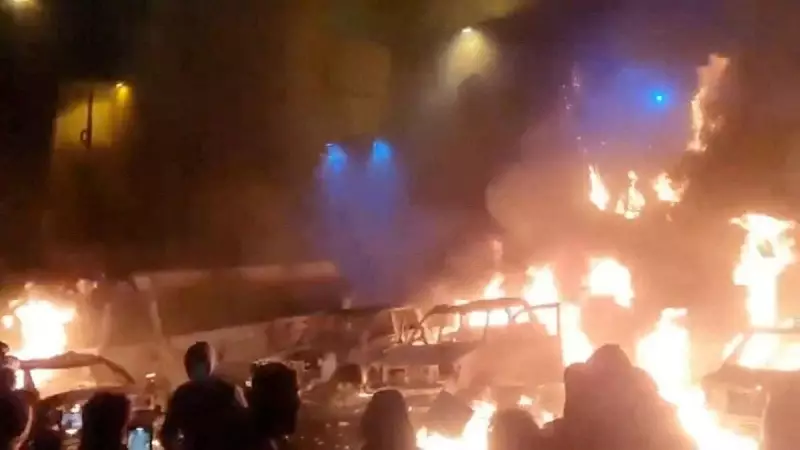
Iran's ruling establishment is grappling with a significant legitimacy crisis as a wave of public demonstrations, which ignited in Tehran last month, has now extended to every corner of the nation. The unrest, while not yet matching the massive scale of the 2022-23 protests, underscores persistent and deep-rooted dissatisfaction among the populace.
Nationwide Reach of the Discontent
The current wave of protests has achieved a notable geographical spread, reaching all of Iran's 31 provinces. This nationwide footprint highlights the broad-based nature of the grievances, moving beyond isolated pockets of dissent to a more generalized expression of frustration. The protests began in the capital, Tehran, in December 2025, and have since gained momentum, resonating in cities and towns across the diverse provinces of the country.
A Comparative Scale with Past Unrest
Analysts and observers note that the present demonstrations have yet to reach the scale of the 2022-3 unrest. That earlier, monumental wave was sparked by the tragic death of Mahsa Amini, a young woman who died in custody after being detained by the morality police for allegedly violating the country's strict Islamic dress code. Her death became a powerful symbol and catalyst for months of protests that posed one of the most serious challenges to the Islamic Republic in decades.

The comparison is crucial for understanding the regime's current predicament. While the physical scale may be different, the fact that significant protests have re-emerged across the entire country suggests the underlying issues that fueled the Mahsa Amini protests remain largely unaddressed. The demands often revolve around political freedoms, economic hardships, and social restrictions.
The Core Challenge: Regime Legitimacy
The persistent and spreading nature of these protests points directly to a crisis of legitimacy for Iran's rulers. When citizens repeatedly take to the streets across the nation, it signals a breakdown in the social contract and a questioning of the governing authority's right to rule. The government's response to these protests—often involving internet restrictions, arrests, and a strong security posture—is being closely watched as an indicator of its stability and confidence.
The situation remains fluid. The protests in Tehran and other major urban centers serve as a barometer for public sentiment. Whether this movement will subside or escalate to the levels seen in 2022 depends on multiple factors, including the government's handling of the situation, the emergence of clear leadership within the protests, and the international community's reaction.
For now, the map of Iran is once again dotted with sites of public defiance, presenting the clerical leadership with a familiar yet profoundly dangerous challenge to its authority and control.






