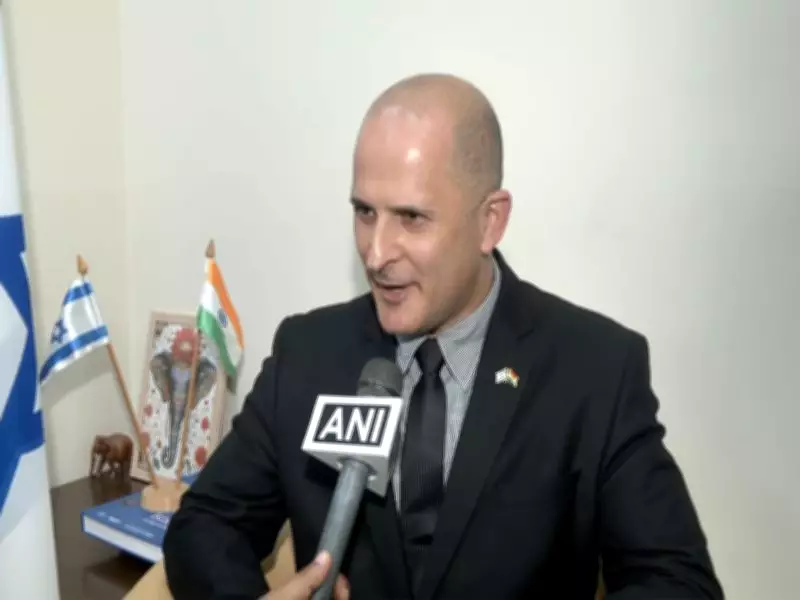
Deputy Chief of Mission at the Embassy of Israel in India, Fares Saeb, has expressed hope that Israel's concerns regarding Hezbollah and Iran's nuclear program will be addressed during the 60-day negotiation period between the United States and Iran. Speaking to ANI, Saeb emphasized that Israel will not accept Iran's nuclear ambitions or its financing of proxies against Israel.
Israel’s Stance on Iran and Hezbollah
Saeb stated, "We have our own concerns regarding the deal and actually it's a ceasefire for 60 days that will negotiate an agreement later. We hope that our concerns will be addressed during those 60 days." He acknowledged that the United States is aware of Israel's priorities, which include Iran's nuclear program, ballistic missile development, and support for proxies such as Hezbollah. "There are two things on the table that we won't accept anyway: Iran's nuclear program and, connected to it, the ballistic missiles program and financing and operating the proxies against Israel, including Hezbollah and others," he added.
Ongoing Tensions with Lebanon
Tensions between Israel and Lebanon remain high, with Israel refusing to halt operations against Hezbollah in southern Lebanon. On Wednesday, an Israeli Defense Forces reservist was killed, and seven others, including senior officers, were wounded by a Hezbollah explosive device. Despite this, Saeb expressed optimism about negotiations with Lebanon: "As long as our concerns are addressed, of course we see this as a positive initiative. We hope that the negotiations with the Lebanese government will go forward and will be positive." He stressed that the main obstacle to peace is Iran, stating, "The only thing that is in the middle between us and Lebanon being in peace is Iran. If Hezbollah, operated by Iran and directed by Iran, will keep being a threat on Israel and its citizens, we will react regardless of any agreement between any other two countries."

Iran’s Perspective
Meanwhile, Iranian Foreign Ministry spokesperson Esmaeil Baqaei confirmed that Iranian ships have entered ports without issue and cargo has been unloaded without hindrance. He noted that US President Donald Trump and Iranian President Masoud Pezeshkian virtually signed a 14-point Memorandum of Understanding (MoU) between the two countries. "We concluded that the better option is for the Presidents of the two countries to sign the text virtually, without the need to be present in a specific location. There are multiple reasons for this decision, one of the most important of which is that when the text reaches the signature of the highest officials of the two countries, the cost of violating it will also be higher," Baqaei said. The MoU aims to end hostilities, reopen the Strait of Hormuz, and initiate a 60-day process to negotiate a final agreement on sanctions and Iran's nuclear program.
The situation remains fluid, with Israel closely monitoring developments and reiterating its readiness to act independently to ensure its security.