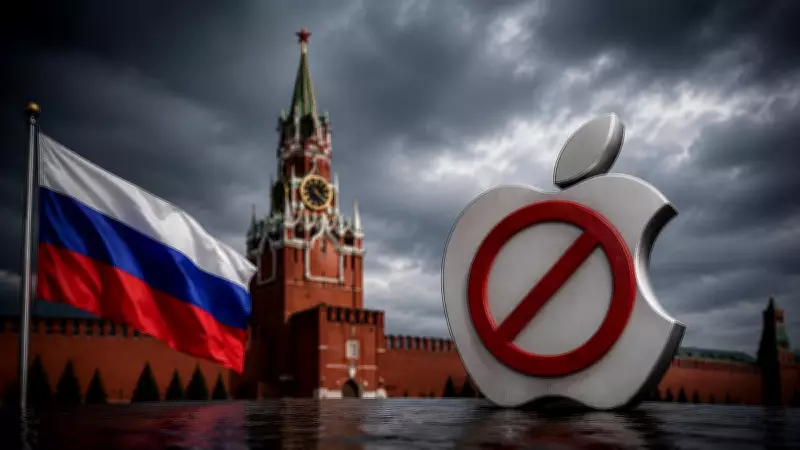
The Kremlin has demanded an explanation from Apple after several Russian applications were removed from the App Store, marking the latest escalation in the ongoing conflict between Moscow and Western technology platforms since the start of the war in Ukraine in 2022.
Kremlin's Demand for Answers
According to a statement from the Russian government, the Kremlin is seeking clarity on why Apple removed these apps without prior notice. The demand was issued through official channels, with Russian authorities stressing that such actions could be seen as discriminatory against Russian developers and users.
"We expect Apple to provide a detailed explanation for the removal of these applications," a Kremlin spokesperson said. "This move appears to be part of a broader pattern of restrictions against Russian digital products."

Background of Restrictions
Since Russia's invasion of Ukraine in February 2022, Moscow has imposed strict controls on foreign technology platforms. The country has blocked access to several Western social media sites, including Facebook and Twitter (now X), and has passed laws requiring foreign tech companies to store Russian users' data on servers within the country.
Apple has previously complied with some Russian regulations, such as removing certain apps deemed illegal by Russian authorities. However, the recent removal of Russian apps has raised tensions, with Russian officials accusing Apple of bowing to political pressure from the U.S. government.
Impact on Russian Developers and Users
The removal affects a range of applications developed by Russian companies, including banking, news, and social media apps. For Russian users, this means reduced access to domestic services through Apple's platform. For developers, it represents a significant loss of revenue and visibility, as the App Store is a primary distribution channel for iOS apps.
According to data from the Russian Ministry of Digital Development, as of 2025, approximately 25% of all mobile apps used in Russia were developed by domestic companies. The removal of these apps could accelerate the shift toward alternative app stores, such as those offered by Huawei or Russian tech firm Yandex.
Broader Context of Tech Tensions
The dispute is part of a wider confrontation between Russia and Western tech giants. Since 2022, Russia has fined Google, Meta, and Apple multiple times for failing to remove prohibited content and for violating data localization laws. In response, some Western companies have scaled back their operations in Russia, though Apple continues to sell iPhones and provide services in the country.
Analysts suggest that the Kremlin's demand could lead to further restrictions on Apple's operations in Russia, potentially including a ban on iPhone sales or the blocking of Apple services. However, such measures could harm Russian consumers who rely on Apple products.
Apple's Possible Response
Apple has not yet publicly commented on the Kremlin's demand. Historically, the company has tried to navigate Russia's complex regulatory environment while maintaining its global policies. Apple's App Store guidelines prohibit apps that are "illegal" or "harmful," and the company has removed apps in various countries to comply with local laws.
However, Apple has also resisted some government demands, such as the U.S. government's request to unlock an iPhone used by a terrorist. In Russia, the company faces a delicate balance: complying with Moscow's demands could alienate Western users and governments, while refusing could lead to a ban in one of its largest markets outside the U.S. and Europe.
Reactions from Russian Officials
Russian lawmakers have reacted strongly to the app removals. Dmitry Medvedev, Deputy Chairman of the Security Council of Russia, called the move "economic warfare" and suggested that Russia should retaliate by banning Apple products. "This is yet another hostile act from an American corporation," Medvedev said in a statement. "We must respond appropriately to protect our digital sovereignty."
The Russian Ministry of Foreign Affairs also weighed in, stating that the removal of apps "violates the principles of free trade and non-discrimination." The ministry said it would consider legal action against Apple if the company does not provide a satisfactory explanation.

Conclusion
The Kremlin's demand for an explanation from Apple underscores the deepening rift between Russia and Western technology companies. As the conflict in Ukraine continues, digital platforms have become a new battleground for geopolitical influence. The outcome of this dispute could have significant implications for the availability of apps in Russia and the broader relationship between Moscow and Silicon Valley.