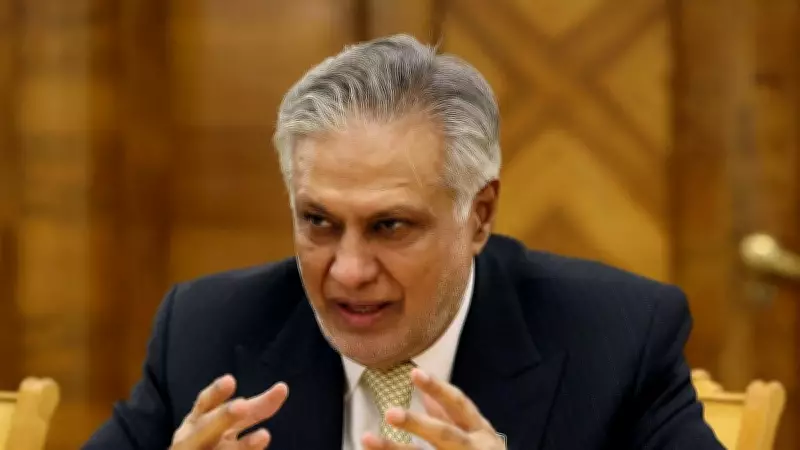
Pakistan's Deputy Prime Minister and Foreign Minister Ishaq Dar has formally written to the United Nations Security Council (UNSC) concerning the Indus Waters Treaty. The letter highlights Pakistan's apprehensions over India's alleged violations of the treaty, which governs the sharing of water from the Indus River system.
Background of the Indus Waters Treaty
The Indus Waters Treaty was signed in 1960 between India and Pakistan, with the World Bank as a signatory. It allocates the waters of the Indus River and its tributaries between the two countries. Under the treaty, India controls the eastern rivers (Ravi, Beas, Sutlej), while Pakistan has rights to the western rivers (Indus, Jhelum, Chenab).
Pakistan's Concerns
In his letter, Dar emphasized that India's construction of dams and hydroelectric projects on the western rivers violates the treaty's provisions. He argued that these projects reduce water flow to Pakistan, impacting agriculture and livelihoods. Pakistan has previously raised these issues through bilateral mechanisms but claims India has not addressed them adequately.

Appeal to the UNSC
Dar urged the UNSC to intervene and ensure India's compliance with the treaty. He stressed that water security is a matter of national importance for Pakistan and that any violation could lead to regional instability. The letter also called for the appointment of a neutral expert to resolve the dispute, as outlined in the treaty's dispute resolution mechanism.
India's Position
India has consistently maintained that its projects are within the treaty's framework and do not violate its terms. New Delhi argues that the treaty allows for the construction of run-of-the-river hydroelectric projects, which do not significantly affect water flow. India has also accused Pakistan of using the treaty for political leverage.
International Implications
The Indus Waters Treaty is often cited as a successful example of water-sharing between hostile neighbors. However, escalating tensions over water resources have raised concerns about the treaty's sustainability. The UNSC's response to Dar's letter will be closely watched by the international community.
Pakistan's move to involve the UNSC underscores the gravity of the dispute. It remains to be seen whether the Security Council will take up the matter or encourage bilateral resolution through existing mechanisms.