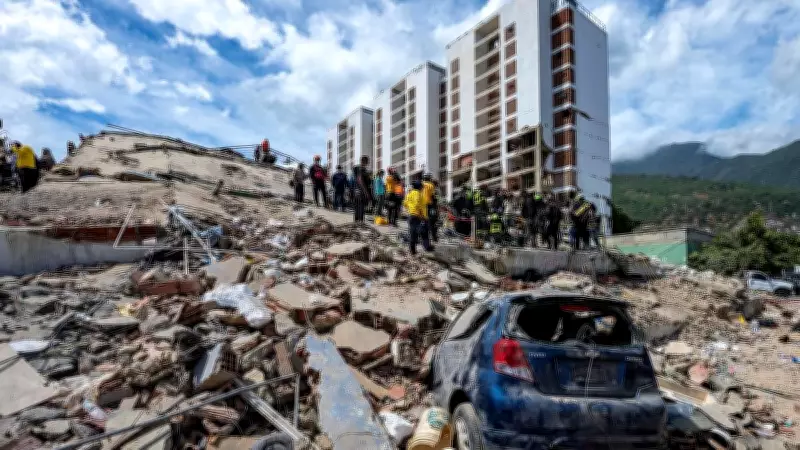
Rescuers Work Around the Clock After Deadly Quake
Search and rescue teams in Venezuela are pressing on with efforts to find survivors trapped under rubble, even as hope dwindles following the powerful earthquake that struck the country. According to aid groups and disaster response experts, the first 72 hours after a quake are the most critical for locating victims alive, and that window is rapidly closing.
The earthquake, which registered a magnitude of 7.3 on the Richter scale, hit near the coastal city of Cumaná on June 26, 2026, causing widespread destruction. Thousands of buildings have collapsed, and the death toll has risen to over 1,200, with more than 5,000 injured, according to official figures from the Venezuelan government. Hundreds remain missing.
International Aid Arrives as Local Resources Strained
International rescue teams from Mexico, Colombia, and Russia have joined local first responders in the search. However, the scale of the devastation has overwhelmed Venezuela's already fragile infrastructure. The country has been grappling with economic crisis and shortages of fuel, medicine, and heavy equipment, hampering rescue efforts.

"We are doing everything possible, but the conditions are extremely difficult," said Carlos Mendoza, head of Venezuela's National Civil Protection agency. "We are racing against time, and we need more specialized equipment to lift concrete slabs."
Survivors Pulled from Rubble Amid Aftershocks
Despite the challenges, there have been moments of hope. On Monday, rescuers pulled a 7-year-old girl from the wreckage of her home in Cumaná, 30 hours after the quake. Her mother, who was also rescued earlier, was reunited with her at a field hospital. However, such stories are becoming rarer as time passes.
At least 200 aftershocks have been recorded, some as strong as magnitude 5.2, further destabilizing damaged structures and posing risks to rescue workers. The United Nations has pledged $15 million in emergency aid, and the World Health Organization is sending medical supplies to treat the injured.
Long Road Ahead for Recovery
Even after the search phase ends, the recovery process will be long and arduous. An estimated 50,000 people have been displaced, and many are sleeping in the open or in temporary shelters. The government has declared a state of emergency in five states, and President Nicolás Maduro has called for international assistance.
"This is a tragedy of immense proportions," Maduro said in a televised address. "We will not rest until every person who can be saved is saved, and then we will rebuild."
As the 72-hour mark approaches, rescue teams continue to listen for signs of life, using sniffer dogs and acoustic devices. But with each passing hour, the focus is gradually shifting from rescue to recovery.