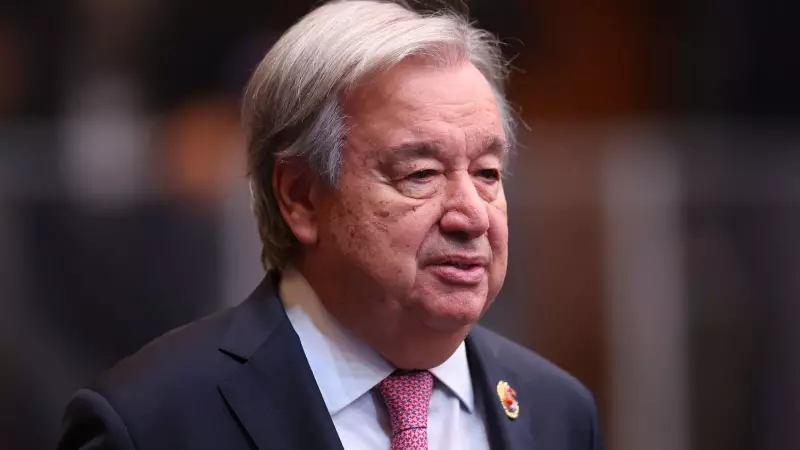
United Nations Secretary-General António Guterres has issued a stark warning about the global surge in military expenditure, stating that nations are now prioritizing "instruments of war" over "investments in peace." This caution comes alongside the UN's updated economic projections, which include a modest upgrade for India's growth forecast for 2026.
A World Diverting Resources to Arms
In the UN's World Economic Situation and Prospects report for 2026, released recently, Guterres highlighted a troubling trend. He pointed out that strategic rivalries are weakening international cooperation and global trade. The report, prepared by the UN Department of Economic and Social Affairs (DESA), notes that global military spending soared to a record $2.7 trillion in 2024. This marks the most significant annual increase since at least 1988.
"Rising military expenditure is diverting scarce resources away from social spending," Guterres wrote. He expressed concern that this arms race is happening against a backdrop of subdued global growth, which remains below pre-pandemic levels. The surge is primarily driven by the world's ten largest military spenders, who account for nearly three-quarters of the total global outlay.

Trump's Call for a $1.5 Trillion US Military Budget
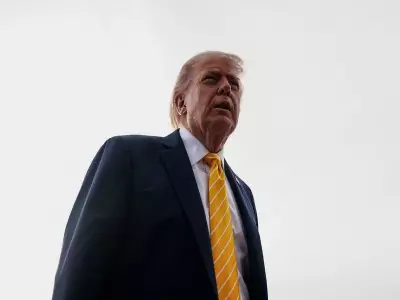
The UN chief's remarks gain particular relevance following a recent statement by former US President Donald Trump. On his social media platform, Truth Social, Trump claimed he had discussed with lawmakers and determined that the US military budget for 2027 should be $1.5 trillion, not $1 trillion. He argued that revenue from American tariffs could fund this increase. For context, the US Congress has already approved a defense budget of $901 billion for 2026.
The UN report warns that this jump in defense spending threatens to pull crucial funding away from long-term investments in human capital, infrastructure, and development aid for vulnerable economies.
India's Economic Outlook: A Silver Lining Amid Global Risks
On the economic front, the UN report presented a revised outlook for India. The global body has raised its GDP growth forecast for India for calendar year 2026 by 20 basis points to 6.6%. Growth is expected to pick up slightly to 6.7% in 2027. For 2025, the UN estimates India's growth at 7.4%, aligning with the Indian government's first advance estimate for the fiscal year ending March 2026.
The UN attributes India's resilient growth to strong domestic consumption and robust public investment. These factors are expected to largely counter the potential negative impact of heightened US tariffs on Indian exports. The report also notes that recent tax reforms and monetary policy easing should provide additional short-term support to the economy.
However, risks remain. Christopher Garroway, the UN's country economist for India, highlighted several threats to the forecast, including climate change and persistent inflation. If the proposed 50% US tariffs remain, they could pressure India's export performance in 2026, given that the US accounts for 18% of Indian exports. Some key exports like electronics and smartphones may stay exempt, and strong demand from other large markets like Europe and the Middle East could partially offset the US impact.
Global Growth Remains Fragile
The UN also upgraded its global growth forecast for 2026 by 20 basis points to 2.7%. The world economy is projected to expand by 2.8% in 2025. Despite this slight improvement, the report cautions that global growth is expected to remain lower than the 3.2% average annual rate seen in the decade before the COVID-19 pandemic.
Structural challenges like weak investment, high debt burdens, and limited fiscal flexibility in many countries could mean the world settles into a persistently slower growth path than in the pre-pandemic era. While artificial intelligence holds promise for boosting productivity, the scale and distribution of its benefits remain uncertain.
In summary, the UN paints a picture of a world at a crossroads: one where geopolitical tensions fuel record military spending at the potential cost of social and economic development, even as economies like India show resilience amid global headwinds.