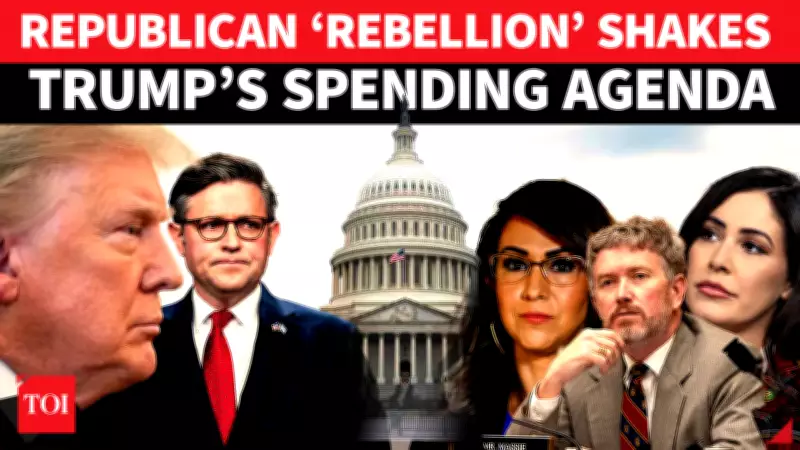
Trump's GOP Unity Faces Major Test As 21 House Republicans Revolt Against Spending Bill
Washington narrowly averted a government shutdown, but the political fallout within the Republican Party appears far from contained. A critical $1.2 trillion spending package, championed by President Donald Trump and House Speaker Mike Johnson, managed to pass the House of Representatives. However, this legislative victory came at a significant cost, exposing deep fractures within the GOP ranks.
A Public Rebellion Within Republican Ranks
The bill's passage was secured only after a very public and damaging revolt by a bloc of 21 Republican lawmakers. These dissenters took a firm stand against their own party leadership, torpedoing what was meant to be a show of spending unity ahead of the deadline. Their rebellion was not a quiet disagreement but a loud condemnation of the negotiated deal.
The dissenting Republicans launched a series of sharp accusations against their leadership. They charged that party leaders had surrendered crucial political leverage in negotiations. Furthermore, they expressed fury over the failure to secure promised election integrity measures in the final legislation. A third major point of contention was funding for Homeland Security, which the rebels claimed was severely shortchanged, compromising national security priorities.

Victory With a Cost: Questions Over Trump's Grip
While President Trump can technically claim a win by preventing a government shutdown, the episode has sparked intense scrutiny over his influence and control within the party he once commanded unquestioningly. The mutiny by nearly two dozen members of his own party suggests a growing willingness to defy the presidential agenda, even on high-stakes fiscal matters.
This internal strife raises profound questions about the GOP's ability to present a united front moving forward. The rebellion indicates that a significant faction within the House Republican conference is prioritizing ideological purity and specific policy demands over party loyalty and the avoidance of a politically damaging shutdown. The event marks one of the most visible cracks in Republican unity during this administration, signaling potential challenges for Trump's legislative strategy and his role as the party's de facto leader.
The narrow avoidance of a shutdown may have resolved an immediate crisis, but the political damage inflicted by this public revolt could have longer-lasting implications for governance, party discipline, and the upcoming electoral cycle.