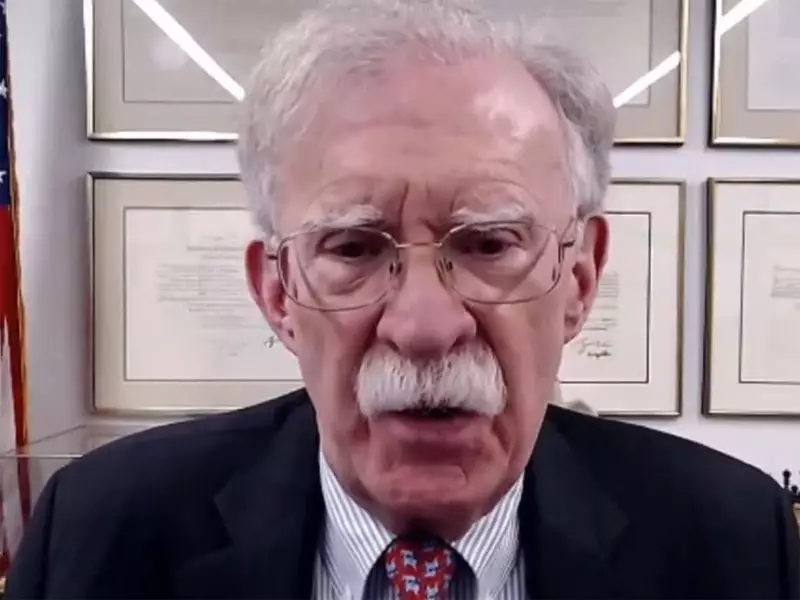
Former United States National Security Advisor John Bolton has delivered a sharp critique of the Trump administration's approach to India, characterising its threats of punitive tariffs as a "self-inflicted wound" that caused significant diplomatic friction. Bolton's remarks provide a rare insider's view into the tensions that simmered beneath the surface of the much-publicised "bromance" between former President Donald Trump and Prime Minister Narendra Modi.
Bolton's Candid Assessment of a Diplomatic Misstep
In a recent discussion, Bolton did not mince words when analysing the period where the Trump administration wielded the threat of tariffs against New Delhi. He argued that this aggressive trade policy, often targeting Indian exports, created "real trouble" in the bilateral relationship. According to the former NSA, these actions were counterproductive, undermining the broader strategic goals of the US-India partnership.
"The idea that we could treat India just like any other country for purposes of trade... was a fundamental mistake," Bolton suggested. He emphasised that India, as a pivotal democratic counterweight to China in the Indo-Pacific, deserved a more nuanced and strategic approach from Washington. The tariff threats, he implied, treated a key strategic ally with a blunt instrument typically reserved for adversaries or unfair trade partners, damaging trust.

The Contradiction Between Personal Diplomacy and Policy
Bolton's comments highlight a striking contradiction that defined that era of Indo-US ties. Publicly, Donald Trump and Narendra Modi shared a rapport, with grand rallies in Houston and Ahmedabad showcasing a personal connection. However, behind the scenes, trade negotiators were locked in difficult disputes over tariffs, market access, and data localisation.
The former security advisor pointed out that the hardline on trade directly conflicted with the strategic imperative to strengthen ties with India. This policy dissonance, he believes, forced India to look harder at other partnerships and reinforced defensive economic policies. The "self-inflicted wound" metaphor underscores his view that America's actions needlessly harmed its own foreign policy objectives in a critical region.
Lasting Impact on Bilateral Trust and Strategy
The repercussions of this period, as outlined by Bolton, extended beyond temporary trade spats. The constant threat of tariffs introduced an element of unpredictability and wariness into the relationship. While the two nations continued to cooperate closely on defense and security matters like the Quad, the economic pillar of the partnership remained shaky.
Bolton's revelations serve as a cautionary tale for current and future US administrations. They underscore that treating allies with transactional, zero-sum trade tactics can jeopardise larger geopolitical goals. His analysis suggests that repairing the "real trouble" caused required careful diplomatic effort and a shift away from confrontational trade postures.
In conclusion, John Bolton's frank assessment peels back the curtain on a turbulent chapter in US-India relations. It reveals how domestic-focused trade policies can inflict unintended damage on vital international alliances. As both nations navigate a complex global order, the lesson from this "self-inflicted wound" remains clear: strategic partnerships require consistency and a balance between economic interests and long-term diplomatic vision.