The Enigma of Death Valley's Moving Stones
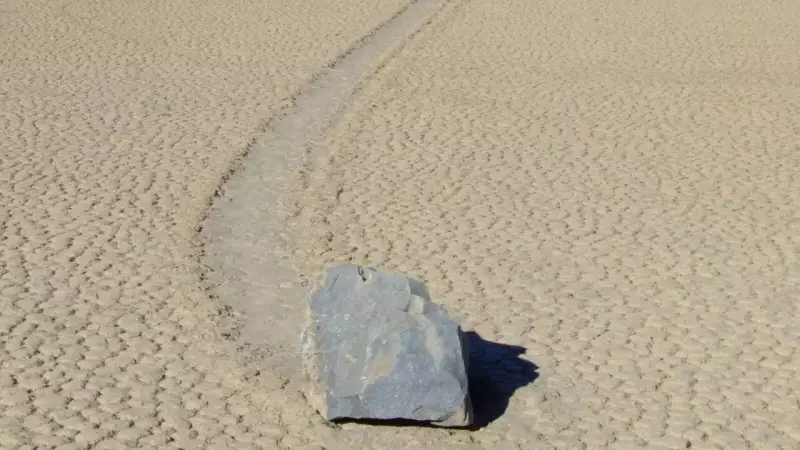
In one of the planet's most arid and scorching regions lies a geological puzzle that has baffled observers for generations. Within the iconic Death Valley National Park in California, USA, an extraordinary natural occurrence unfolds at the remote Racetrack Playa—a dry lake bed where massive rocks appear to move autonomously across the desert floor. These wandering boulders, often referred to as "sailing stones" or "sliding rocks," leave behind intricate trails etched into the soft mud, stretching for tens to hundreds of meters in straight lines or gentle curves. For decades, this phenomenon remained unexplained, with no visible animal activity or consistent wind patterns to account for the stones' mysterious journeys.
Unraveling the Mystery Through Scientific Observation
The long-standing enigma of the sliding rocks was finally cracked through meticulous research conducted in 2013 and 2014. A dedicated team of scientists equipped Racetrack Playa with GPS-tagged stones, advanced weather stations, and time-lapse cameras to capture the elusive movement. Their groundbreaking 2014 paper, titled "Sliding Rocks on Racetrack Playa, Death Valley National Park: First Observation of Rocks in Motion," documented the rocks in action for the very first time, revealing the precise conditions behind their motion. The key factors identified were shallow pools of rainwater, freezing nighttime temperatures, and the formation of thin ice sheets on the playa surface.
The Ice, Sun, and Wind Mechanism Explained
So, how do these hefty rocks glide across an almost perfectly flat desert landscape? The answer lies in a delicate and rare interplay of natural elements:

- Occasional rainfall creates temporary shallow pools of water on the dry lake bed.
- During cold nights, this water freezes into fragile ice sheets, just a few millimeters thick.
- As morning sunlight warms the ice, it fractures into large floating panels.
- Gentle winds then push these ice sheets, which in turn nudge the rocks, dragging them slowly across the wet, slick mud.
This slow-motion process continues until the ice disintegrates or the water evaporates, leaving behind the distinctive trails that have captivated scientists and tourists alike.
Why This Phenomenon Occurs So Rarely
The sliding stones do not move every year; their motion depends on a precise alignment of conditions that seldom coincide. Death Valley is renowned as one of North America's driest locations, requiring sufficient rainfall to form shallow water, temperatures cold enough to freeze it overnight, and ample sunshine to break the ice in the morning. Since all three factors must align perfectly, rock movement events may only happen a few times per decade, making each occurrence a rare and remarkable spectacle.
What the Trails Reveal About Nature's Forces
When these boulders shift, they create trails that narrate their journey. Some trails are straight, others curve gradually, and some even intersect. The length and direction of these paths depend on variables like wind direction, ice breakup patterns, and how long the ice sheets remain intact. Over the years, scientists have mapped hundreds of these trails, but it was the direct observation of motion that confirmed the ice-and-wind mechanism as the definitive cause.
Visiting Racetrack Playa Today
Today, Racetrack Playa has become a bucket-list destination for geologists, photographers, and curious travelers from around the globe. The site is most accessible during cooler months when conditions are milder, and occasional winter rains might trigger the sliding stones to come alive. Visitors should be prepared for a rugged drive through challenging terrain to witness this natural wonder firsthand.
The resolution of this mystery not only highlights the ingenuity of scientific inquiry but also underscores the incredible, often hidden, forces that shape our planet's landscapes. Death Valley's sliding rocks stand as a testament to nature's ability to surprise and inspire, even in the most unlikely of places.