

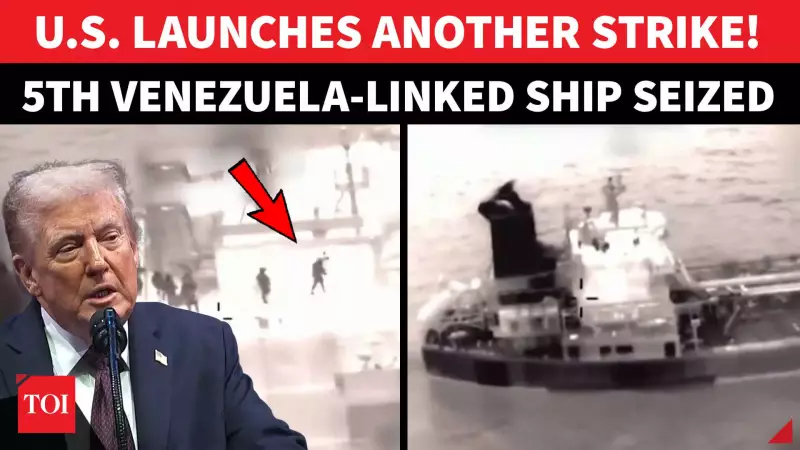
In a significant escalation of its maritime enforcement, the United States has captured a fifth oil tanker linked to Venezuela, tightening the noose on sanctioned oil shipments moving through the Caribbean Sea. The operation, conducted in the pre-dawn hours, marks a bold step in Washington's campaign to financially pressure the government in Caracas by cutting off its illicit energy exports.
Pre-Dawn Interception of the Olina
U.S. Coast Guard and Joint Task Force Southern Spear units intercepted the tanker named Olina in a coordinated action. American authorities have accused the vessel of attempting to evade international sanctions by sailing under a false flag. This seizure is part of a broader and intensified crackdown, where Washington is actively targeting ships suspected of transporting Venezuelan oil in violation of sanctions.
The move is seen as a direct strike against the economic lifeline of President Nicolás Maduro's administration. By blocking these maritime oil transfers, the U.S. aims to starve the regime of crucial revenue derived from energy exports. The operation on January 10, 2026, represents one of the most assertive displays of U.S. power in the region concerning these sanctions.

International Repercussions and Russian Scrutiny
The latest seizure has not gone unnoticed on the global stage, with key international players closely monitoring the developments. Russia, a major ally of the Venezuelan government, is watching the situation intently. Moscow has historically provided political and economic support to Caracas, and this aggressive U.S. action in what it considers its sphere of influence is likely to cause significant diplomatic friction.
This incident follows a pattern of increasing U.S. naval and coast guard activity in the Caribbean to enforce oil sanctions. The capture of five tankers signals a shift from warnings to direct, physical intervention, setting a new precedent for maritime sanctions enforcement.
A Sharp Escalation in Maritime Policy
Analysts view this as a sharp escalation in the U.S. strategy to isolate Venezuela. The Biden administration, continuing a policy stance from prior years, is demonstrating a willingness to use military and law enforcement assets at sea to achieve geopolitical goals. The message to Caracas and its trading partners is clear: attempts to circumvent the oil embargo will be met with direct interception.
The consequences of this action are multifaceted:
- For Venezuela: It further constricts an already beleaguered economy heavily dependent on oil sales.
- For Global Oil Markets: It removes sanctioned cargo from circulation, potentially affecting supply chains and shadow market operations.
- For Diplomacy: It raises tensions with Russia and other nations that oppose U.S. sanctions, possibly leading to retaliatory measures or heightened rhetoric.
As the situation develops, the world will be observing how Venezuela and its allies respond to this latest challenge, and whether the U.S. will continue to expand this high-stakes maritime interdiction campaign.






