

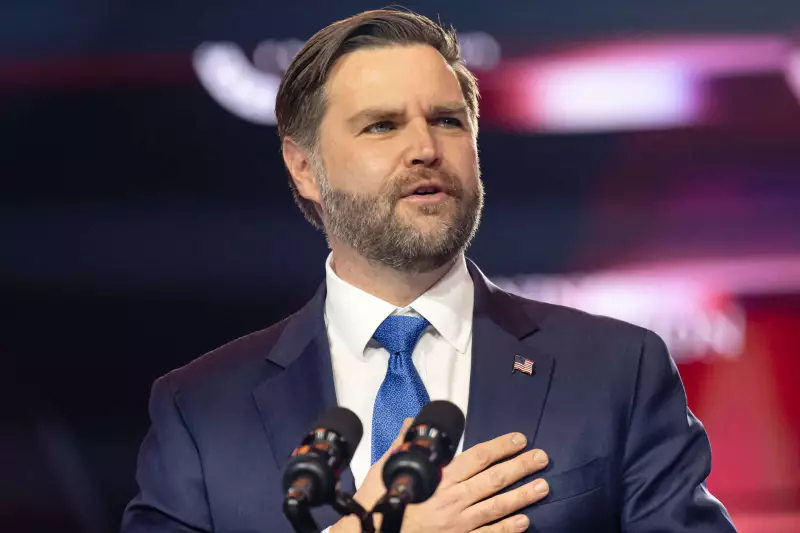
In a critical but largely unseen political drama, Vice President JD Vance played a pivotal role in preventing a major public fallout between former President Donald Trump and billionaire tech mogul Elon Musk. As Musk's criticism of the Trump administration grew louder and threats of a breakaway political movement emerged, Vance stepped in as a crucial mediator to keep the powerful alliance intact.
The Bridge Between MAGA and Silicon Valley
JD Vance's unique position as a Republican fluent in both MAGA politics and Silicon Valley priorities made him the ideal go-between. His relationship with Elon Musk predated his time in office, stemming from his background as a venture capitalist. This connection became vital when Musk's influence within Trump's circle expanded and his frustrations began spilling onto social media platform X.
The tensions reached a boiling point after Musk publicly attacked Trump's spending plans. He also suggested the President was blocking the release of sensitive documents related to the late financier Jeffrey Epstein. The conflict deepened significantly when Trump withdrew the nomination of Jared Isaacman, a key Musk ally, for the position of NASA administrator. For Musk, this move symbolized a broader marginalization, leading to serious discussions about launching a new political party that could fracture core Republican support.

Behind-the-Scenes Diplomacy Averts Crisis
As the public feud threatened to destabilize Trump's political coalition, Vance engaged in delicate, private diplomacy. He maintained frequent direct contact with Musk and lobbied Republican lawmakers to reconsider Isaacman's nomination, framing it as a necessary goodwill gesture to ease tensions. Allies described Vance's efforts as a largely invisible campaign aimed at stopping a war of words from escalating into a full political divorce.
The mediation proved successful. By late summer, Musk had quietly abandoned his plans for forming a new political party, which eased fears of a split within the MAGA voter base. Subsequently, Musk has signaled a renewed willingness to back Republican candidates in the upcoming 2026 midterm elections, indicating a fragile truce with Trump. However, the détente remains uneasy, with both sides acutely aware of how quickly their relationship previously deteriorated.
The 2028 Presidency and Long-Term Ambitions
Vance's actions were driven by both loyalty and shrewd political strategy. Widely viewed as a potential frontrunner for the Republican presidential nomination in 2028, Vance is deeply aware of Elon Musk's immense financial power and unparalleled online influence. Reports suggest that Musk, in turn, sees Vance as a serious future candidate. Therefore, preserving this relationship is considered as crucial for Vance's own long-term political ambitions as it is for maintaining the current stability of Trump's coalition.
The episode highlights the complex, often hidden negotiations that define modern political alliances, where tech billionaires wield significant power and vice presidents must act as both loyalists and strategic future contenders.






