

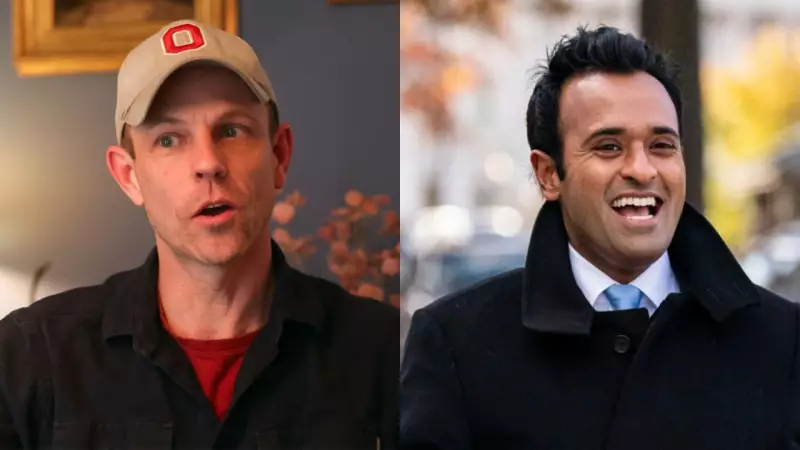
A bitter political feud within Ohio's Republican Party has taken a sharp religious turn, with gubernatorial candidate Casey Putsch launching multiple personal attacks against his Indian-origin rival, Vivek Ramaswamy. Putsch, positioning himself as a hard-line "America First" challenger, has repeatedly targeted Ramaswamy's Hindu faith, calling him an "anti-Christ" and questioning his religious background in a series of inflammatory social media posts.
Religious Allegations and Unsubstantiated Claims
In a recent post on X (formerly Twitter), Putsch made sensational allegations against Ramaswamy, accusing him of being backed by a "major Christian organization" despite being "a Hindu man." The post included multiple unverified claims, with Putsch writing that Ramaswamy "looks down on Americans," is "facing RICO charges," made millions while investors lost money through alleged fraud, and that his bodyguard had been arrested for drug trafficking earlier this month.
Putsch further alleged that Ramaswamy "has done nothing for Ohio people" while simultaneously promoting himself and asking for votes. No evidence was provided in the post to support any of these claims, raising questions about the factual basis of the allegations.

The Biotech Controversy
The attacks reference Ramaswamy's business background, particularly his involvement with biotech company Axovant, a Roivant spinoff. Several years ago, Axovant purchased a discarded Alzheimer's drug and took it public at approximately $2.2 billion. When the drug failed in clinical trials and the stock collapsed, Ramaswamy had already sold shares and reported high income, leading to investor losses while he profited. This episode has been described by critics as a "pump-and-dump" scheme, though Ramaswamy has defended his business decisions.
Personal and Political Dynamics
Putsch, a Northwest Ohio business owner, has positioned himself as a grassroots challenger in the Republican primary. He has accused the Christian investor backing Ramaswamy of attacking him personally, claiming a campaign has begun in which he, a Christian, is being called an atheist while running against a "Hindu and Jewish opponent." Putsch dramatically asked, "Could this be more EVIL?" in his social media post.
Earlier, Putsch mocked Ramaswamy for deleting social media apps, claiming he was avoiding criticism and racist abuse. He has also accused Ramaswamy of hypocrisy for accepting a $50,000 Soros Fellowship for New Americans while earning much more than that amount, and for later campaigning against identity-based politics, which he called "fraud." Ramaswamy has defended the scholarship as merit-based.
The Political Landscape
Ramaswamy, a former 2024 Republican presidential candidate, is now running for Ohio governor in the 2026 election scheduled for this November. He enjoys strong backing from former US President Donald Trump, giving him significant political clout within the Republican establishment.
Meanwhile, Democrats have prepared their own candidate for the gubernatorial race, former health director Dr. Amy Acton, setting the stage for a contentious election season in Ohio. The Republican primary battle between Ramaswamy and Putsch represents a clash between establishment-backed politics and grassroots populism, with religious identity becoming an unexpected flashpoint in the conflict.
As the November election approaches, this intra-party feud highlights the complex dynamics within the Republican Party, where religious identity, business background, and political allegiance are becoming intertwined in unexpected ways. The outcome of this primary could signal broader trends within the party as it prepares for crucial state-level elections across the country.






