

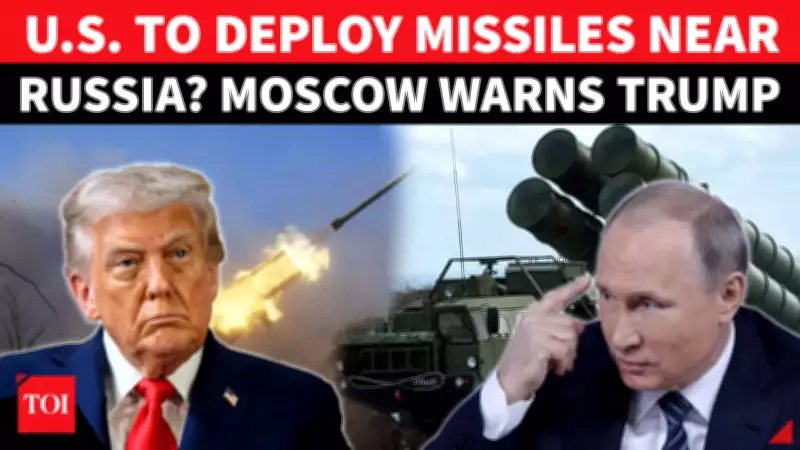
Russia Issues Blistering Warning Over US Missile Deployment in Germany
Tensions are escalating dramatically across Europe as Russia has delivered a sharp and unequivocal warning regarding the potential deployment of United States intermediate-range missiles on German soil. According to a report from the TASS news agency, Russian Deputy Foreign Minister Alexander Grushko explicitly stated to the Izvestia daily newspaper that Moscow will not stand idly by and will respond decisively to any such military moves by the West.
Moscow's Threat of Military Retaliation
In his stern comments, Grushko declared that Russia is prepared to create "equal or even more effective" counter-force capabilities if the US proceeds with its plans to station missile systems in Germany this year. This direct threat has immediately revived deep-seated fears of a new and dangerous missile arms race on the European continent, echoing the Cold War-era tensions that once divided East and West.
The warning comes at a critical juncture, as Washington and Berlin are actively advancing their strategic plans to bolster military defenses in response to perceived security threats. Europe has consistently cited growing concerns over Russia's aggressive posturing and military activities, while Moscow, in turn, has repeatedly accused NATO of systematically building up military power directly against Russian interests.

A Dangerous Escalation in East-West Relations
This latest standoff represents a significant and perilous escalation in the already strained relations between Russia and the Western alliance. The potential deployment of US missiles in Germany is viewed by analysts as a move that could fundamentally reshape the entire security landscape of Europe, introducing new layers of complexity and risk into an already volatile geopolitical environment.
The core of the dispute centers on a fundamental clash of security perspectives. NATO member states argue that enhanced missile defenses are necessary to deter potential aggression and protect allied territories. Conversely, Russia interprets these deployments as provocative acts that threaten its national security and strategic stability in the region.
This diplomatic and military confrontation underscores the fragile state of international relations, where a single strategic decision can trigger a cascade of responses with far-reaching consequences.Broader Implications for European Security
The situation highlights several critical issues:
- The resurgence of missile defense as a central point of contention between nuclear powers.
- The increasing militarization of diplomatic disputes in Europe.
- The challenge of maintaining strategic balance while addressing legitimate security concerns.
- The potential for miscalculation or escalation in an environment of mutual suspicion.
As both sides dig in their positions, the international community watches with apprehension, concerned that this latest development could mark a turning point in post-Cold War European security arrangements. The coming months will likely see intense diplomatic maneuvering as all parties involved seek to navigate this dangerous new phase in East-West relations without triggering an irreversible crisis.






