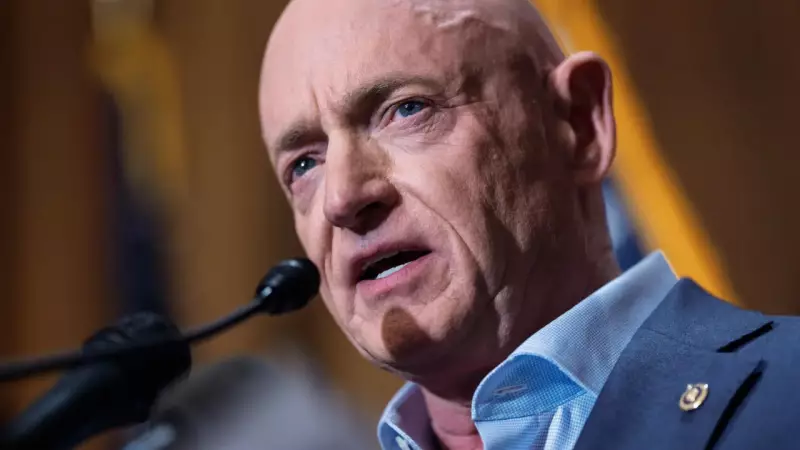
In a significant escalation of tensions between the US legislative and executive branches, Senator Mark Kelly, a retired Navy Captain and former astronaut, was handed a formal punishment on Monday. The action stems from a video he released alongside five other Congress members, in which he urged American troops to refuse any illegal orders coming from their superiors.
The Clash: Sedition Allegations vs. Free Speech
The administration of former President Donald Trump labeled the video as "reckless and seditious," arguing it was designed to undermine military discipline. Leading the charge was Defense Secretary Pete Hegseth, who asserted that Kelly's status as a sitting US Senator does not shield him from accountability under military justice, given he still receives a military pension.
"Six weeks ago, Senator Mark Kelly — and five other members of Congress — released a reckless and seditious video that was clearly intended to undermine good order and military discipline," Hegseth wrote. He emphasized that the Department of War and the American people "expect justice."

Kelly's Fiery Retort and Defense of Service
Senator Kelly responded with a forceful statement, dismissing Hegseth as "the most unqualified Secretary of Defense in our country’s history." He framed the censure and threats of demotion or prosecution as intimidation tactics and vowed to fight them.
"If Pete Hegseth... thinks he can intimidate me with a censure or threats to demote me or prosecute me, he still doesn’t get it. I will fight this with everything I’ve got," Kelly declared. He argued the move was an attempt to silence criticism from retired service members. "There is nothing more un-American than that," he concluded.
In an emotional defense of his record, Kelly highlighted the sacrifices behind his rank and pension. "I got shot at. I missed holidays and birthdays. I commanded a space shuttle mission while my wife Gabby recovered from a gunshot wound to the head," he wrote, stating he earned his status through service and sacrifice, like generations before him.
Broader Implications for Military and Political Discourse
This confrontation raises profound questions about the limits of free speech for retired military personnel in politics and the power of the executive branch to sanction elected officials for their statements. The incident, occurring in a highly charged political climate, sets a precedent that could affect how retired service members engage in public debate and criticism of the government.
The core of the dispute lies in the interpretation of the video's message: whether it was a patriotic reminder to uphold the law or a seditious act meant to incite insubordination within the ranks. With Kelly promising a fierce legal and political battle, this story is poised to develop further, testing the boundaries between military code, political expression, and governmental authority.