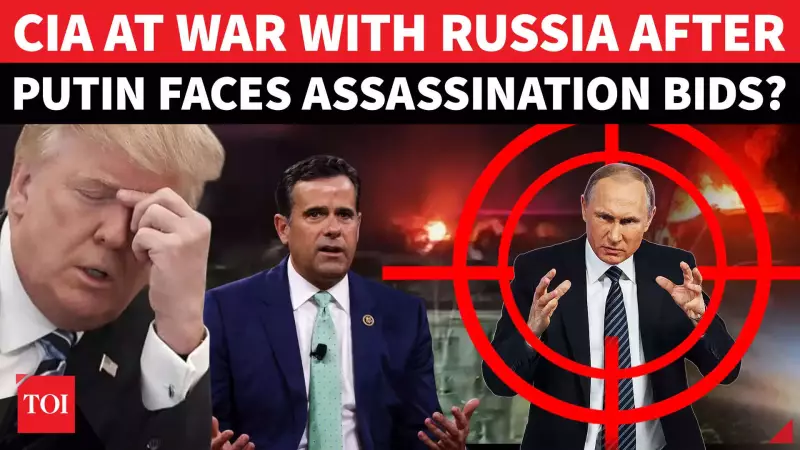
Tensions between the United States and Russia have escalated sharply following explosive claims from Moscow about a second assassination attempt on President Vladimir Putin. The situation has placed US President Donald Trump in a difficult diplomatic position, as American intelligence agencies publicly challenge Russia's narrative while Trump himself seeks to fast-track a deal with the Kremlin.
Conflicting Narratives and Intelligence Assessments
The crisis erupted on January 1, 2026, after Russian authorities alleged a targeted attack on their leader. These claims, which point to drone strikes and other covert methods, have been met with skepticism from US intelligence circles. According to assessments from the Central Intelligence Agency (CIA), the evidence presented by Moscow is dubious, casting significant doubt on the veracity of the allegations.
This public divergence between the CIA's view and Russia's official stance has created a stark conflict. The world is now watching two superpowers present entirely different stories about the same event, fueling uncertainty and raising the stakes in an already volatile relationship.

Trump's Diplomatic Dilemma
Complicating the matter further is President Donald Trump's own political agenda. Despite the brewing intelligence clash, Trump is actively advocating for a swift agreement with President Putin. This push for a deal "as soon as possible" appears at odds with the hardening position of the US intelligence community, which is essentially accusing Russia of fabricating a casus belli.
Analysts suggest this puts Trump in a tight spot, forcing him to navigate between supporting his own intelligence agencies and pursuing his diplomatic outreach to Moscow. The President's approach could risk undermining the credibility of US intelligence or, conversely, derailing potential negotiations with Russia.
Global Repercussions and Fears of Escalation
The fallout from this incident extends far beyond Washington and Moscow. The conflicting narratives over assassination bids and drone strikes have ignited a high-stakes geopolitical clash. Allies in Europe and elsewhere are anxiously observing, concerned that the war of words could spiral into a more direct and dangerous confrontation.
This episode adds another layer of complexity to ongoing global conflicts, including the war in Ukraine. It threatens to destabilize delicate diplomatic channels and has led to widespread fear of an escalating geopolitical drama with unpredictable consequences. The international community is now bracing for the next move from both capitals, hoping for de-escalation but preparing for further turmoil.