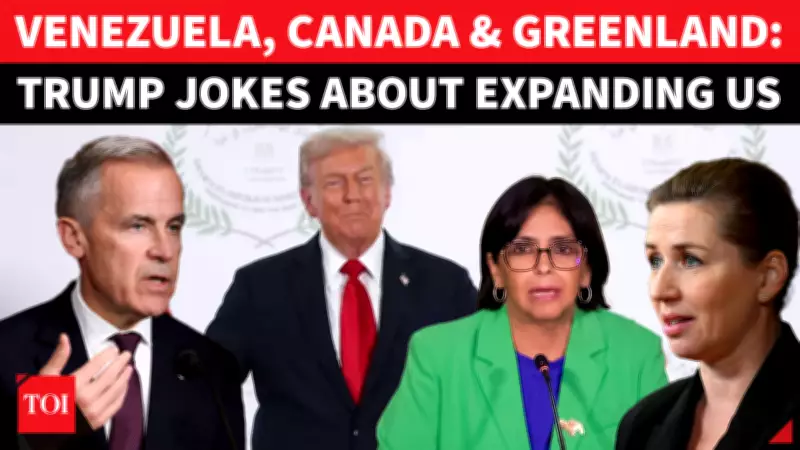
Washington Elite Stunned by Trump's Territorial Expansion Joke
Former US President Donald Trump created an awkward silence at an exclusive Washington dinner with a provocative joke about territorial expansion, according to eyewitness accounts from the Alfalfa Club gathering. The remarks, delivered before an audience of CEOs, prominent politicians, and Federal Reserve officials, included specific references to making Canada the 51st state, Greenland the 52nd, and Venezuela the 53rd state of the United States.
Mixed Reactions to Humorous Remarks
While clearly intended as humor, Trump's comments about potentially invading Greenland or purchasing the territory instead drew mixed reactions from the assembled Washington elite. The remarks have reignited ongoing debates about Trump's unconventional approach to foreign policy, particularly regarding Arctic strategy and the United States' relationship with its northern neighbor Canada.
Diplomatic circles and political critics are now carefully weighing the implications of what some are calling "provocative territorial quips" that touch on sensitive international relationships. The timing and context of these remarks—delivered at a prestigious gathering of influential figures—have amplified their significance beyond mere dinner conversation.

Broader Foreign Policy Implications
The territorial expansion joke comes amid ongoing discussions about US strategic interests in the Arctic region, where Greenland holds significant geopolitical importance. Additionally, the reference to Venezuela touches on longstanding tensions between the United States and the South American nation, particularly regarding oil resources and political alignment.
Observers note that while delivered in a humorous context, such remarks from a former president and current political figure inevitably carry weight in international diplomatic circles. The incident highlights how offhand comments at private events can quickly become focal points for broader policy discussions and media scrutiny.
The Washington dinner incident serves as another example of how Trump's unconventional communication style continues to shape political discourse and international perceptions of American foreign policy priorities, even in supposedly private settings among the nation's power brokers.