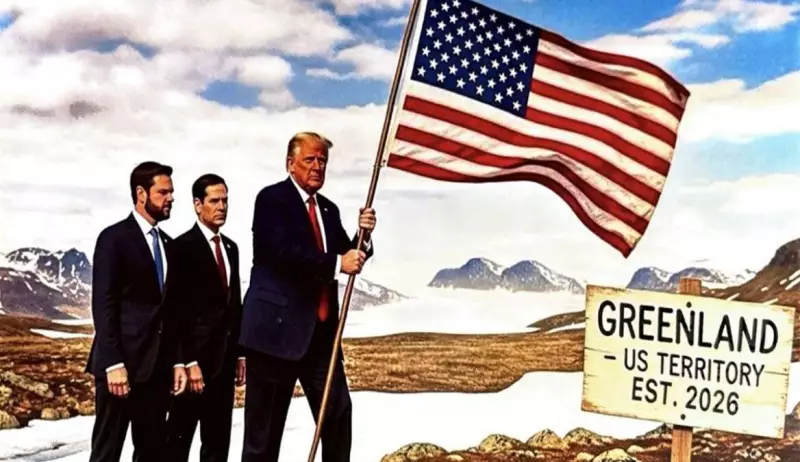
Former US President Donald Trump has stirred controversy by sharing a map on social media. The map incorrectly shows Canada, Greenland, and Venezuela as territories belonging to the United States.
Trump's Social Media Post Sparks Reactions
Trump posted the map on his personal social media account. It quickly went viral, attracting thousands of comments and shares. Many users expressed surprise and confusion over the inaccurate depiction.
Details of the Map
The map displays North and South America with altered borders. Canada appears as part of the US, stretching from the Arctic to the Great Lakes. Greenland is shown as a US territory in the North Atlantic. Venezuela in South America is also labeled under US control.

This representation contradicts actual geopolitical boundaries. Canada is an independent country, Greenland is an autonomous territory of Denmark, and Venezuela is a sovereign nation.
Public and Expert Responses
Social media users reacted with a mix of humor and concern. Some joked about Trump's claims, while others questioned the intent behind the post. Political analysts noted that such maps can spread misinformation.
Experts in geography and international relations emphasized the importance of accurate maps. They warned that false representations can mislead the public and affect diplomatic relations.
Background and Context
Trump has a history of making controversial statements about territories. During his presidency, he expressed interest in purchasing Greenland from Denmark. The idea was rejected by the Danish government.
His administration also imposed sanctions on Venezuela, citing political issues. However, claiming it as US territory is a new and unfounded assertion.
Potential Implications
Sharing such a map could have several effects. It might confuse people about real borders. It could also strain relations with the countries involved. Canada, Greenland, and Venezuela have not officially commented on the post.
Social media platforms face challenges in moderating misleading content. This incident highlights the need for fact-checking and accurate information online.
Conclusion
Donald Trump's map post has drawn attention for its inaccuracies. It serves as a reminder of the power of social media in shaping perceptions. Ensuring truthful representations remains crucial in today's digital age.