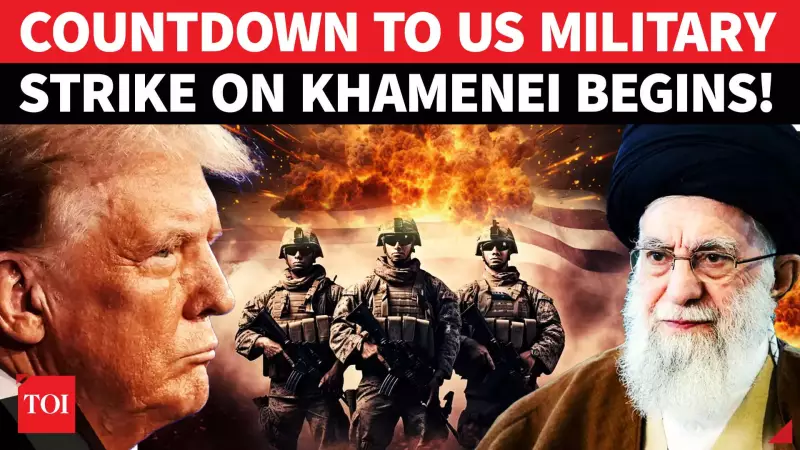
In a significant escalation of rhetoric, United States President Donald Trump has declared that Iran may be crossing a previously stated "red line," prompting the American military to actively examine "very strong options" against the Islamic Republic. This stark warning comes amidst international reports of a severe government crackdown on widespread anti-regime protests within Iran, with the death toll reportedly spiking to 544.
Trump's Air Force One Warning: A Clear Signal to Tehran
Speaking to journalists while aboard Air Force One on January 12, 2026, President Trump addressed the deteriorating situation in Iran. He pointed to the violent suppression of protesters, suggesting that the actions of the Tehran leadership, under Supreme Leader Ayatollah Ali Khamenei, were testing his administration's limits. "They may be crossing that line," Trump stated, referring to his earlier warnings. His comments directly tie the internal Iranian crisis to potential American military response, marking a sharp and dangerous turn in the long-standing adversarial relationship between Washington and Tehran.
Mounting Crisis Inside Iran Fuels International Alarm
The catalyst for this international showdown is the ongoing, massive unrest within Iran. Citizens have taken to the streets in a nationwide wave of demonstrations, facing a brutal response from state security forces. The reported figure of 544 fatalities highlights the scale and severity of the government's crackdown. Despite attempts by Iranian authorities to shut down the internet and control the narrative, videos and reports of violence, including torched cars and explosions, have circulated globally, drawing condemnation and putting the regime of Ayatollah Khamenei under unprecedented pressure.

What Are the "Very Strong Options" for the US Military?
President Trump's revelation that the U.S. military is studying potent courses of action raises immediate and serious questions about the potential for direct conflict. While he did not specify the nature of these options, analysts suggest they could range from targeted airstrikes and cyber operations to more extensive military maneuvers. This development places the standoff on a new, more precarious footing, moving beyond diplomatic posturing to concrete military planning. The world is now watching closely to see if the verbal warnings will translate into tangible action, and how Iran might respond to any American move.
The current spike in tensions creates a volatile global scenario. Any miscalculation or escalation could have devastating consequences for regional stability, already fragile due to conflicts and rivalries in the Middle East. The international community, including other global powers, is now faced with the urgent task of assessing and potentially intervening to prevent a slide toward open warfare between the United States and Iran.