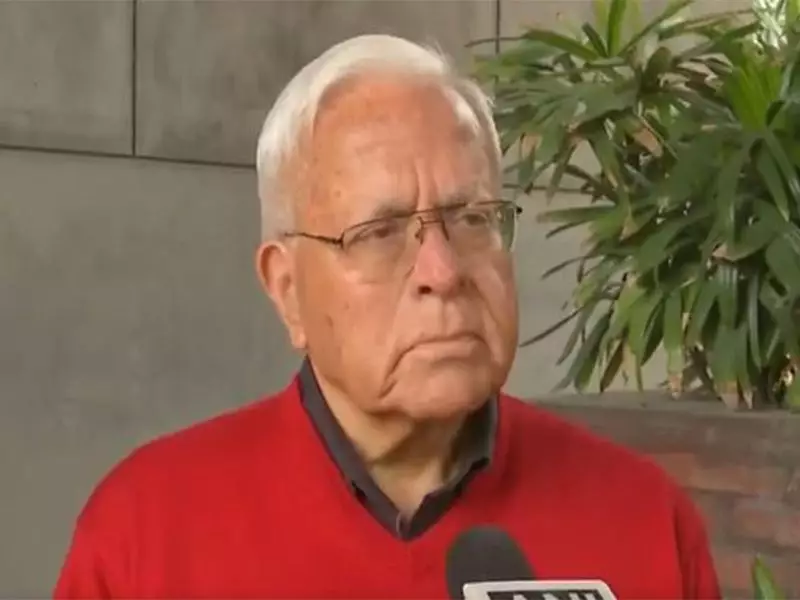
Former Indian diplomat Ashok Sajjanhar has made a striking claim, directly linking former US President Donald Trump's well-documented skepticism of climate science to a broader pattern of American disengagement from global institutions. According to Sajjanhar, this stance was a primary driver behind the United States' decision to withdraw from a staggering 66 international organizations, treaties, and agreements during Trump's tenure.
The Core of the Accusation: A Pattern of Denial and Disengagement
In a detailed analysis, Sajjanhar, who served as India's Ambassador to Sweden and Latvia, argued that Trump's "climate denial form" was not an isolated policy position. Instead, it represented the ideological core of an "America First" foreign policy that viewed multilateral cooperation with deep suspicion. The most symbolic and impactful of these withdrawals was from the 2015 Paris Agreement on climate change, a global pact aimed at curbing greenhouse gas emissions.
However, Sajjanhar emphasized that the retreat was far more extensive. The list of 66 exits includes bodies critical to global health, security, and human rights. Notable examples are the World Health Organization (WHO) and the UN Human Rights Council. The Trump administration also left the UNESCO and the Global Compact on Migration, while threatening the fundamental structure of alliances like NATO by questioning their value.

Consequences for Global Governance and India's Stance
This mass exodus created significant vacuum in global leadership, particularly on pressing issues like pandemic response and environmental regulation. Sajjanhar pointed out that while the US stepped back, other powers, notably China, sought to increase their influence within these vacant spaces. This shift posed a complex challenge for nations like India, which often rely on stable, rules-based international systems.
Interestingly, Sajjanhar contrasted Trump's approach with India's under Prime Minister Narendra Modi. He highlighted that India remained committed to the Paris Agreement and even enhanced its climate targets, positioning itself as a responsible global stakeholder. This divergence, he suggested, showed India's independent and principled stand on critical global issues, even as its strategic partner, the US, pursued an isolationist path.
The Road Ahead: Re-engagement and Lasting Damage
The report notes that President Joe Biden's administration moved swiftly to rejoin the Paris Agreement and the WHO. However, Sajjanhar warns that the damage inflicted over four years is not easily undone. Trust in America's long-term commitments has been eroded, and allies now factor in the possibility of future policy reversals. The episode serves as a stark lesson on how the personal convictions of a national leader, especially one from a dominant power, can destabilize the intricate web of international cooperation designed to tackle shared global threats.
Ultimately, Ashok Sajjanhar's analysis frames Trump's climate denial not just as an environmental policy failure, but as the catalyst for a deliberate and wide-ranging withdrawal from the multilateral order. The consequences of this period continue to shape diplomacy, global power dynamics, and the world's collective ability to address transnational challenges.