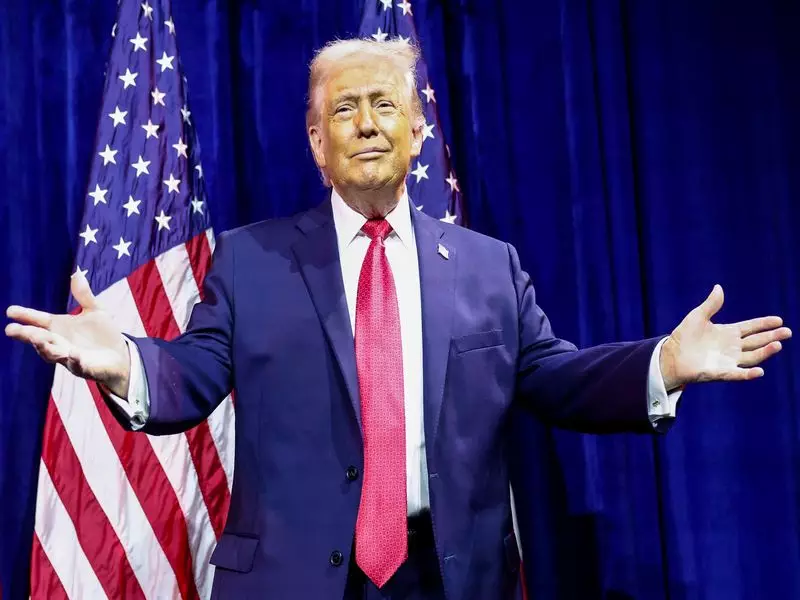
Former US President Donald Trump's fascination with purchasing Greenland was not a mere whim but a calculated move rooted in America's long-term strategic interests in the resource-rich and geopolitically crucial Arctic region. This underlying strategy has now materialized in a formal agreement, underscoring Washington's commitment to countering growing Russian and Chinese influence in the High North.
The Genesis of Trump's Greenland Gambit
In 2019, news broke that President Trump had repeatedly expressed interest in the United States buying the vast, autonomous Danish territory of Greenland. The proposal was swiftly and firmly rejected by the Danish government, which called the idea "absurd." The episode caused a brief diplomatic rift, with Trump postponing a state visit to Copenhagen.
However, behind the headlines lay a serious geopolitical calculation. Greenland, the world's largest island, sits at the entrance to the Arctic Ocean. Its location offers control over key maritime passages that are becoming increasingly navigable due to climate change. Furthermore, the island is believed to hold significant deposits of rare earth minerals, essential for modern technology and currently dominated by China's supply chain.

Trump's idea, though unorthodox in its presentation, highlighted a growing American anxiety about securing a permanent and dominant foothold in the Arctic. The rejection did not end US ambitions; it merely changed the approach from acquisition to enhanced partnership.
The Pompeo Visit and a New Strategic Understanding
The strategic pivot became clear in 2020 when then-US Secretary of State Mike Pompeo visited Copenhagen. While the trip aimed to mend fences, its core agenda was Greenland. Pompeo engaged directly with Greenland's Premier, Kim Kielsen, bypassing Copenhagen to a degree, which signaled Washington's recognition of the island's autonomous government.
The talks culminated in a landmark agreement. The United States and Greenland announced a plan to open a US consulate in the capital, Nuuk, for the first time since 1953. More importantly, they signed a comprehensive cooperation agreement focused on economic development, education, and, critically, mineral resource exploration.
This pact, signed in April 2021, commits the US to investing $12.1 million in Greenland's economy, with a significant portion earmarked for developing the mining sector. The funds are intended to foster sustainable mineral projects and provide training, directly addressing the need to diversify Greenland's economy away from its heavy reliance on fishing and annual block grants from Denmark.
The Great Power Competition in the Melting Arctic
The US-Greenland understanding cannot be viewed in isolation. It is a direct response to the escalating great power competition in the Arctic. Russia has been aggressively modernizing its Arctic military bases and building a new fleet of icebreakers to secure the Northern Sea Route. China, declaring itself a "near-Arctic state," has invested heavily in polar research and infrastructure projects across the region, including in Greenland.
For the United States, a deeper partnership with Greenland serves multiple strategic objectives:
- Countering Chinese Influence: It preempts Beijing's efforts to gain economic leverage through mining investments, which could lead to strategic dependency.
- Enhancing Security: It strengthens the US position near the GIUK Gap (Greenland-Iceland-UK), a vital naval chokepoint for monitoring Russian submarine activity from the Arctic to the Atlantic.
- Securing Critical Minerals: It opens a potential pathway for the US to access rare earth elements outside of Chinese control, a key national security priority.
While Denmark retains control over Greenland's foreign and defense policy, the new agreement grants the US unprecedented direct access to the island's economic and developmental agenda. This creates a delicate balance for Nuuk and Copenhagen, who welcome investment but are wary of becoming a pawn in a larger geopolitical struggle.

Implications and the Road Ahead
The fallout from Trump's initial proposition and the subsequent agreement has permanently altered the dynamics in the Arctic. It has forced European allies, particularly within NATO, to pay greater attention to the region's security. It has also empowered Greenlandic leaders, who now find themselves with more suitors and greater agency in shaping their future.
The Biden administration has continued this strategic focus, maintaining the policies set in motion. The consulate in Nuuk is moving forward, and cooperation on minerals and climate research remains a priority. The episode proves that even the most controversial ideas can catalyze significant diplomatic and strategic realignments.
Ultimately, Trump's "obsession" with Greenland was a blunt articulation of a strategic imperative that transcends any single administration. The melting ice is revealing not just new geography, but a new frontline in global power politics, with Greenland firmly at its center. The US-Greenland understanding is America's concrete step to ensure it is not left out in the cold.