

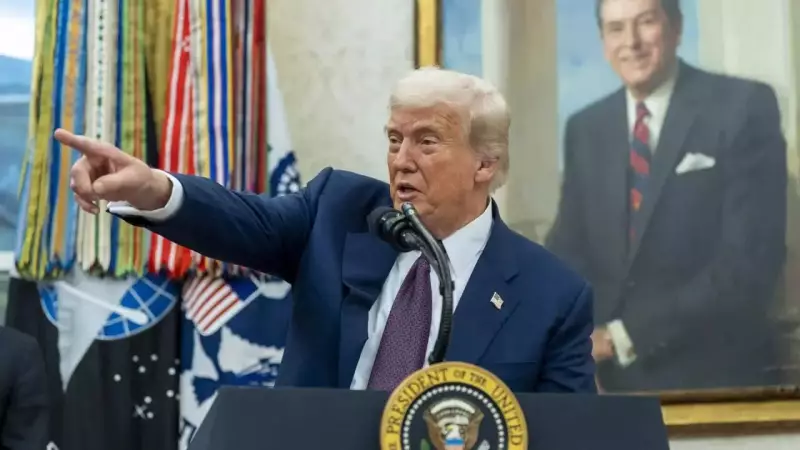
The United States military has conducted a series of airstrikes on multiple targets within Venezuela, including the capital city of Caracas, and the states of Miranda, Aragua, and La Guaira. Following the attacks, the Venezuelan government declared a national emergency. In a dramatic escalation, US President Donald Trump asserted that American forces successfully captured Venezuelan President Nicolas Maduro along with his wife.
Trump's Oil Focus and Viral Video Resurface
Amid the ongoing military operations, an old video of President Trump from December 18, 2025, has begun circulating widely online. In the clip, recorded before boarding Air Force One, Trump is heard stating, "They took away our oil rights. We had a lot of oil there. They drove our companies out of there, and we want them back." This statement underscores what analysts see as a primary driver of the conflict: control over Venezuela's vast oil reserves.
While the Trump administration has repeatedly justified strikes on Venezuelan vessels by accusing them of drug smuggling, the underlying emphasis has consistently been on energy resources. The US has previously destroyed Venezuelan cargo ships with missile attacks. Trump defended these actions by claiming Venezuela was smuggling large quantities of drugs into the United States, a flow he said US soldiers had halted. He has personally labelled Nicolas Maduro a drug trafficker.

Maximum Pressure Campaign and Regime Change Ultimatum
Since beginning his second term, President Trump has placed the Venezuelan leader squarely in his crosshairs, pursuing a "maximum pressure" campaign against the Caracas regime. According to reports, Trump accused Maduro of orchestrating destabilising activities across the Americas, including drug trafficking and facilitating illegal immigration to the US. In a significant move last July, the US announced a bounty on Maduro’s head, branding him one of the world's most significant narco-traffickers.
The administration further designated Venezuelan gangs like Tren de Aragua as terrorist organisations and initiated airstrikes against alleged drug traffickers in the Caribbean Sea. This was followed by the seizure of Venezuelan tankers and a bolstered US military presence in the waters surrounding the South American nation.
Trump openly entertained the idea of regime change. In late November, he presented Maduro with an ultimatum to relinquish power, offering him safe passage out of Venezuela. Maduro rejected the offer, telling supporters he did not desire "a slave’s peace" and accusing the US of coveting his country's oil wealth. Just two days before his reported capture, in a televised interview on Thursday, Maduro stated he would welcome US investment in Venezuela's oil sector.
Immediate Aftermath and Regional Implications
The direct military strikes on Venezuelan soil and the capture of its president mark a severe intensification of the long-standing geopolitical feud. The declaration of a national emergency by Venezuelan authorities indicates the grave internal crisis the country now faces. The situation creates fresh uncertainty for regional stability and international oil markets, given Venezuela's status as a nation with some of the largest proven crude oil reserves globally. The world watches closely as the consequences of this unprecedented action unfold.






