

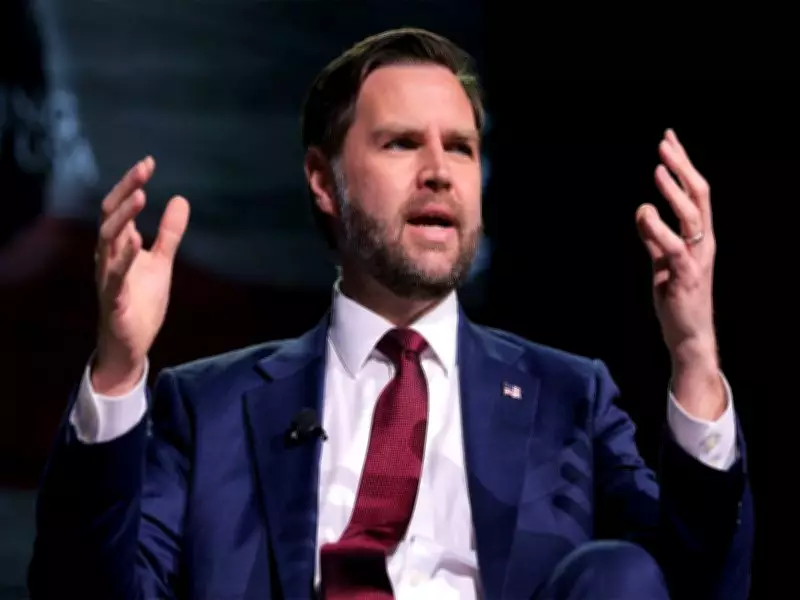
US Vice President JD Vance confirmed that the United States and Iran have agreed to establish a direct deconfliction channel involving military representatives from both nations. The arrangement, reported by Al Jazeera, will station officials from Iran's Islamic Revolutionary Guard Corps (IRGC) and the US Army's Central Command (CENTCOM) in Doha, Qatar, to reduce the risk of further conflict.
Details of the Agreement
In an interview with the British news site UnHerd, Vance described the discussions with Iranian officials. "They were like, 'OK, fine, we'll send somebody from the IRGC to go hang out in Doha with somebody from [U.S. Central Command]' and that's how we're going to settle a lot of these disputes," Vance said, as per Al Jazeera's report on Thursday. The channel aims to resolve disputes directly between the two sides.
Involvement of UAE and Economic Incentives
Vance also noted that the United Arab Emirates (UAE) is engaging with Iran and the IRGC on economic incentives. "The UAE is having conversations with the Iranians that have never happened before, including with the IRGC, about various types of economic incentives," he stated. These remarks come as the US and Iran continue talks following the Lake Lucerne technical discussions.

US-GCC Strategic Partnership Meeting
Meanwhile, the United States and the Gulf Cooperation Council (GCC) reaffirmed their strategic partnership at a ministerial meeting in Manama, Bahrain, on Thursday. Co-chaired by US Secretary of State Marco Rubio and Bahraini Foreign Minister Abdullatif bin Rashid Al Zayani, the meeting included foreign ministers from GCC member states and GCC Secretary General Jasem Albudaiwi. The joint statement highlighted their commitment to regional security, diplomacy with Iran, stability in Syria and Lebanon, and reconstruction in Gaza.
Key Points from the Joint Statement
The ministers welcomed the June 17 memorandum of understanding (MOU) between the US and Iran and acknowledged the mediation efforts of Pakistan and Qatar. They emphasized the need to maintain momentum toward a permanent end to hostilities and reiterated the shared objective of preventing Iran from developing or acquiring a nuclear weapon. The statement also stressed that lasting regional peace requires addressing Iran's ballistic missiles, drones, and support for proxies.
The ministers underscored the importance of reopening the Strait of Hormuz, rejecting any tolls, fees, or attempts to assert control over the strait. They welcomed Oman and the International Maritime Organization's plan to evacuate over 11,000 stranded seafarers. Additionally, they noted that any trade and investment with Iran is conditional and reversible, depending on Tehran's compliance with the MOU and an end to destabilizing activities.






