US Military Initiates Naval Blockade of Strait of Hormuz, Targeting Iranian Ports
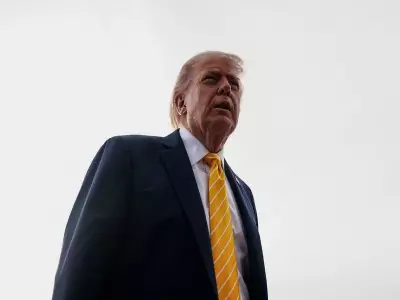
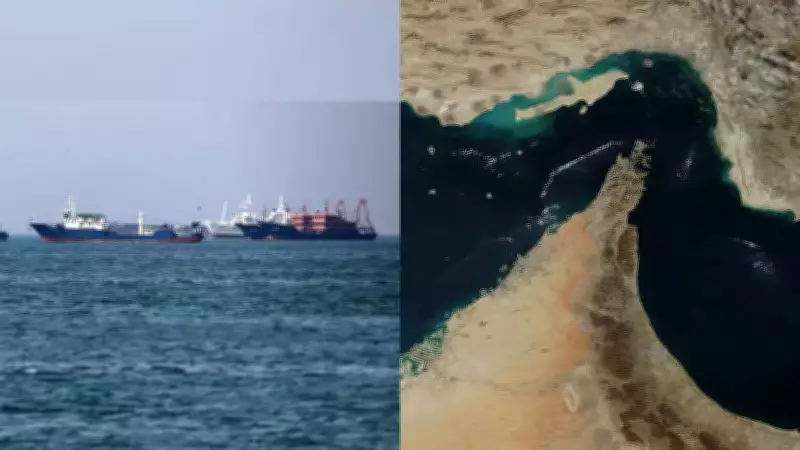
The United States military has announced it will begin enforcing a naval blockade of the Strait of Hormuz at 10 am Eastern Standard Time on Monday, which corresponds to 7:30 pm Indian Standard Time. This decisive action follows President Trump's declaration and is specifically aimed at vessels entering or departing Iranian ports, while explicitly exempting traffic to and from other Gulf nations.
Selective Enforcement and Free Navigation Assurance
U.S. Central Command (CENTCOM), based in Tampa, clarified in a Sunday statement that the blockade will not impede freedom of navigation for ships transiting the strategic waterway to non-Iranian ports. "CENTCOM forces will not impede freedom of navigation for vessels transiting the Strait of Hormuz to and from non-Iranian ports," the command emphasized, ensuring continued passage for countries trading with U.S. allies in the region.
This includes vital Gulf partners such as the United Arab Emirates, Qatar, and Saudi Arabia, all of which depend heavily on the Strait of Hormuz for their trade and commerce. The military command stated unequivocally that the blockade will be enforced impartially against vessels of all nations entering or departing Iranian ports and coastal areas, encompassing all Iranian facilities on both the Arabian Gulf and Gulf of Oman.

Escalation Toward Conflict and International Law Implications
President Trump's decision to impose this naval blockade represents not merely an escalation against Iran but also a move that edges perilously close to an indirect declaration of war, particularly affecting China. Under established international law, a blockade is widely regarded as an act of war, a principle rooted in customary maritime law and codified in various legal interpretations.
Legal experts note that when a state uses force to prevent ingress or egress of vessels to another state's ports, it constitutes belligerent activity. Historically, during the Cuban Missile Crisis, Washington deliberately termed its blockade a "quarantine" to avoid the legal implications of declaring war on the Soviet Union. The Trump administration has dispensed with such diplomatic niceties, directly challenging both Iran and, by extension, China.
China's Critical Exposure to Iranian Oil
What elevates the stakes dramatically is China's overwhelming dependence on Iranian crude oil. China accounts for more than 90 percent of Iran's oil exports, importing approximately 1.5 to 1.6 million barrels per day through a complex network designed to evade sanctions. This volume represents about 15–16 percent of China's total crude imports, making Iran one of Beijing's most crucial external energy suppliers.
The trade operates in a legal grey zone, with Iranian oil transported via a "shadow fleet" of tankers flying flags of convenience. These vessels frequently conduct ship-to-ship transfers in waters near Malaysia and the United Arab Emirates, with cargoes often relabeled before processing in China's independent "teapot" refineries. Payments are increasingly denominated in Chinese yuan, further insulating transactions from U.S. financial scrutiny.
With Western markets closed due to sanctions, China effectively serves as the sole large-scale buyer sustaining Iran's export revenues, which currently range between 1.5 and 1.9 million barrels per day despite wartime disruptions. Severing this economic lifeline would cripple Iran's fiscal capacity to maintain both its domestic economy and military posture.
High Stakes for China's Energy Security
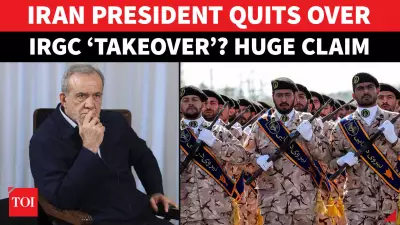
For China, the implications are equally severe. Iranian crude is typically available at discounted prices, and losing this supply would force Beijing into intensified competition for alternative sources from Saudi Arabia and Russia, likely at higher costs and under less favorable terms. By targeting vessels linked to Iranian exports—especially those suspected of paying transit tolls to Iran's Revolutionary Guard—the U.S. blockade directly threatens China's energy supply chain.

Beijing has already expressed strong displeasure, blaming Washington for triggering the crisis through earlier military strikes and warning against the "militarization" of global energy routes. This confrontation places China in a precarious position, balancing energy needs against geopolitical tensions.
India's Minimal Direct Exposure and Secondary Effects
In comparison, India's purchase of Iranian oil remains negligible. New Delhi's recent resumption of imports from Iran, enabled by a temporary U.S. sanctions waiver, is small and largely symbolic. A single cargo delivered to Indian Oil Corporation recently marks a tentative reopening rather than a structural shift in energy policy.
Historically, India imported 15–20 percent of Iran's exports before 2019, but that share plummeted to near zero as sanctions tightened. India subsequently shifted to Russian oil, but even those imports were reduced due to U.S. tariffs amounting to sanctions, forcing diversification to sources like the United States and Venezuela.
If the blockade persists, India's direct exposure will remain minimal, but the nation will experience significant secondary effects, including:
- Higher global oil prices
- Tighter supply in international markets
- Increased competition for alternative energy sources
- Disruption to basmati rice exports to Iran, which India supplies in significant quantities
Uncertainty for Gulf Allies and Global Energy Disruption
The most immediate uncertainty affects other Gulf exporters—Saudi Arabia, the United Arab Emirates, Qatar, and Kuwait—all of which rely on the Strait of Hormuz to ship their oil and gas. While the U.S. blockade is theoretically targeted solely at Iran, maintaining this distinction in practice may prove challenging.
Iran has previously demonstrated its ability to disrupt traffic through mines, drone threats, and selective interdictions. If the U.S. successfully takes control of the Hormuz Strait, President Trump has indicated he will demand substantial concessions, potentially reshaping regional dynamics.
Meanwhile, the global energy system confronts its largest disruption since the 1970s. Current estimates suggest that 9 to 11 million barrels per day of supply capacity have been affected by the ongoing conflict and evolving blockade. Should the U.S. enforce a strict interdiction regime, Iranian exports could collapse, removing up to 1.5 million barrels per day from the market.
The greater risk, however, is contagion: a wider shutdown of Hormuz traffic would take far larger volumes offline, triggering a full-scale supply shock with profound implications for economies worldwide. This blockade represents a pivotal moment in global geopolitics and energy security, with ramifications extending far beyond the immediate region.