

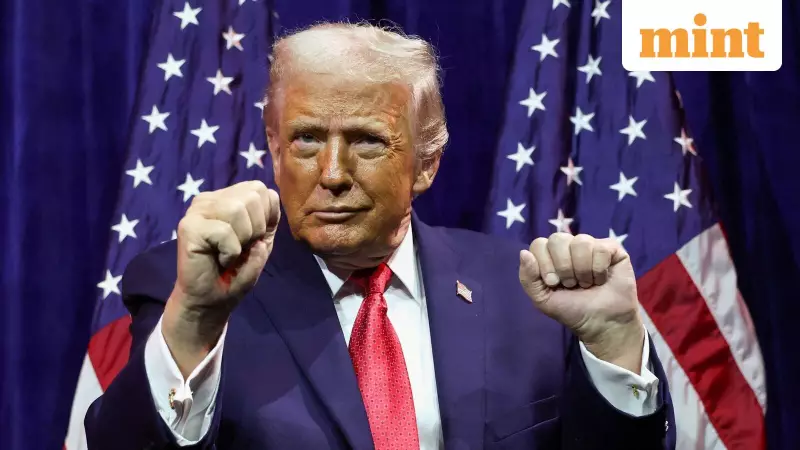
In a sweeping move that redefines America's role on the world stage, President Donald Trump has initiated the withdrawal of the United States from more than five dozen international organizations. The White House justifies this seismic shift by stating these bodies "no longer serve American interests" and instead promote agendas deemed ineffective or hostile.
The Core of the Withdrawal: A 'America First' Doctrine
The decision, announced on 09 January 2026, is a stark embodiment of the Trump-reshaped America's foreign policy philosophy: putting the nation's perceived self-interest above all multilateral commitments. This includes a pivotal exit from the United Nations Framework Convention on Climate Change (UNFCCC), a move consistent with President Trump's longstanding dismissal of the climate crisis as a "hoax."
The ramifications are vast and immediate. A wide spectrum of global initiatives, spanning climate action, public health, and human rights, will face severe funding shortages with the cessation of US financial support. The administration's argument is that this unburdens America from what it sees as unfair obligations. However, critics argue this is a profound miscalculation of how global influence is sustained.

Strategic Myopia: Power Beyond Borders at Risk
The editorial perspective highlights a critical irony. As the US turns its back on collective efforts to combat global warming, it is simultaneously increasing its military focus on the Arctic Ocean. The very phenomenon of a fast-melting polar ice cap—exacerbated by climate change—is opening new navigation routes and intensifying geopolitical rivalry with Russian and Chinese naval forces.
This selective engagement reveals a contradictory stance. The White House appears to acknowledge the physical and strategic consequences of a warming planet while abandoning the primary global forum established to address its root causes. This approach, analysts warn, is strategically short-sighted.
The True Cost: Eroding the Pillars of US Leadership
The foundational risk for the United States lies beyond immediate policy disputes. For decades, US global leadership was built on a dual pillar: unmatched military and economic might, coupled with its image as a force for a better world. By walking away from multilateral setups during crises like climate change, America undermines the second pillar.
The consequence is a diminished ability to project soft power and moral authority. If the world perceives the US solely as a self-interested actor with no stake in common global challenges, other nations may feel little compulsion to support its position as the world's preeminent power. The burden of addressing planetary issues shifts to other coalitions, potentially reshaping alliances and global governance without American centrality.
The final verdict from observers is clear: while Washington may believe it is acting in its self-interest by withdrawing, it isn't. This isolationist pivot may ultimately return to haunt Uncle Sam, constraining its influence and leaving it on the sidelines as the world grapples with its most pressing challenges.






