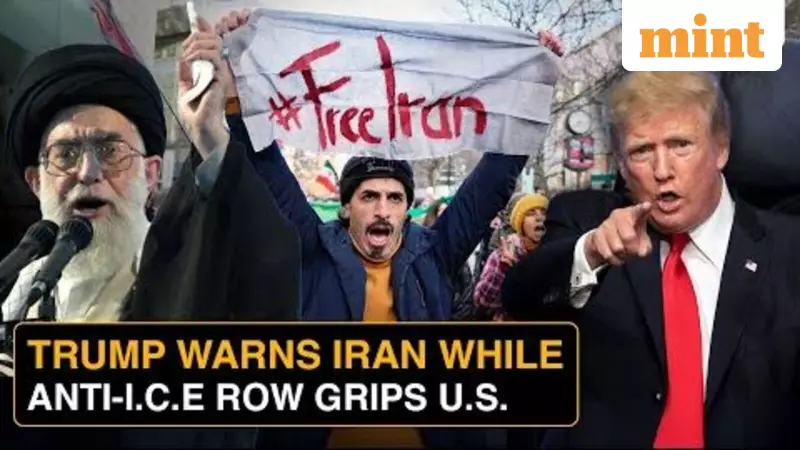
International tensions between the United States and Iran have escalated sharply, punctuated by domestic unrest in America. The flashpoints are a war of words between leaders over protests in Iran and a fatal police shooting in Minneapolis that has reignited public fury.
Trump's Stark Warning to Tehran
On January 11, 2026, US President Donald Trump issued a direct threat to the Iranian government concerning its handling of domestic protests. The protests, which have been raging over economic issues like rising prices and political repression, prompted the President's intervention.
Trump explicitly warned that the United States would "hit very, very hard" if Iranian authorities were to kill protesters. This statement represents a significant escalation in rhetoric, putting the Iranian regime on notice regarding its internal security measures.

Khamenei's Fiery Retort
Iran's Supreme Leader, Ayatollah Ali Khamenei, did not take long to fire back. In a scathing response, he labelled President Trump as the "peak of hubris". Khamenei further predicted that the American leader was doomed to fall from power, drawing parallels with historical tyrants whose reigns ended in collapse.
This exchange underscores the deep-seated hostility and ongoing war of narratives between the two nations, with internal Iranian dissent becoming a new focal point for international diplomatic pressure.
Minneapolis Erupts in Parallel Unrest
As the war of words played out on the global stage, a tragic incident at home exposed America's own societal fractures. In Minneapolis, an agent from the Immigration and Customs Enforcement (ICE) fatally shot a woman during an operation.
The shooting immediately triggered widespread anger and protests across the city. Demonstrators took to the streets, drawing attention to what they perceive as systemic violence and hypocrisy. Critics were quick to point out the contrast between the US government's stance on human rights abroad and the ongoing law enforcement controversies within its own borders.
Consequences and the Hypocrisy Debate
The simultaneous crises have created a complex geopolitical and domestic scenario. The events have fueled a potent debate about US foreign policy consistency. Iranian officials and other global commentators have seized upon the Minneapolis shooting to accuse the United States of double standards—championing protesters in other countries while facing significant civil unrest and allegations of state violence at home.
The situation remains fluid. The international community is watching how the US navigates its admonishment of Iran while managing its internal civil rights challenges. The dual crises of January 11, 2026, highlight how domestic and foreign policy are increasingly intertwined in the modern age of instant communication and global activism.