US Navy Revives 'Tanker War' Playbook with Mine-Clearing Operations in Persian Gulf
The United States Navy has commenced demining operations in the strategically vital Strait of Hormuz, a critical maritime chokepoint for global energy flows. This initiative marks a significant military move aimed at ensuring the free passage of commercial vessels through these troubled waters.
Destroyers Lead the Charge in Initial Demining Efforts
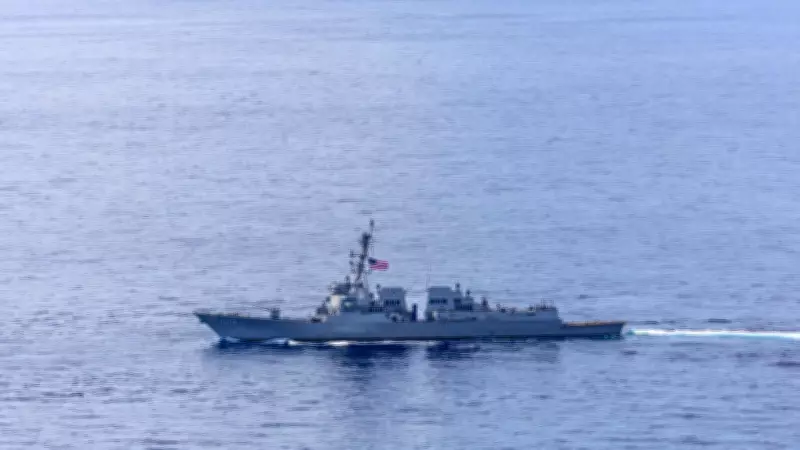
Spearheading the operation are two Arleigh Burke-class destroyers, the USS Frank E. Peterson and the USS Michael Murphy. While these warships are not specifically designed for mine hunting, their advanced sonar systems are being utilized to detect underwater mines. According to reports from The War Zone (TWZ), these vessels represent the first wave of a broader effort to secure the area.
Admiral Brad Cooper, commander of US Central Command, announced, "Today, we began the process of establishing a new passage, and we will share this safe pathway with the maritime industry soon to encourage the free flow of commerce." This statement underscores the operational goal of maintaining unimpeded trade routes.

Unmanned Systems and Specialized Vessels Bolster Operations
In addition to the destroyers, the US Navy is deploying unmanned systems to assist in the demining process. Furthermore, a pair of Avenger-class mine-clearing vessels, the USS Chief and USS Pioneer, are being dispatched to the Persian Gulf to participate directly in these operations.
Interestingly, before the current conflict escalated, the US Navy had forward-deployed three Independent-class Littoral Combat Ships (LCS) in the Persian Gulf. These vessels, equipped with stand-off mine countermeasures that allow for remote detection and destruction of mines, were subsequently moved out of the theater as per TWZ.
Iranian Mines and Political Statements
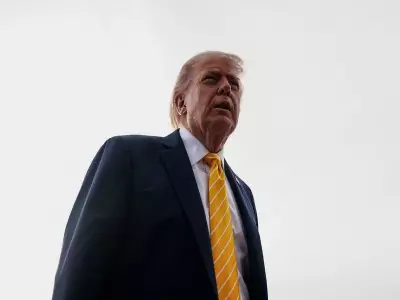
The New York Times reports that the Iranian Revolutionary Guard Corps has stated it lost track of the mines it laid in the narrow waters of the Strait of Hormuz, adding a layer of complexity to the clearance efforts. On the political front, US President Donald Trump declared on social media, "We’re now starting the process of clearing out the Strait of Hormuz, all 28 of Iran’s mine dropper boats are also lying at the bottom of the sea."
Historical Parallels: Operation Earnest Will and Praying Mantis
This is not the first time the US Navy has engaged in such activities in the Persian Gulf. From July 1987 to September 1988, during the final phase of the Iran-Iraq war, the US Navy conducted Operation Earnest Will. This involved hunting Iranian mines and escorting merchant ships through the Gulf.
During that conflict, the American frigate USS Samuel B. Roberts struck an Iranian mine, injuring ten sailors. This incident triggered Operation Praying Mantis, a retaliatory action that resulted in the destruction of numerous Iranian small watercraft and an Iranian base on an oil platform. The current operations echo these historical tactics, often referred to as the 'tanker war' playbook.
Strategic Implications for Global Energy Security
The Strait of Hormuz is a linchpin for global oil shipments, with approximately one-fifth of the world's petroleum passing through its narrow confines. The US Navy's demining operations are therefore of paramount importance to international energy security and economic stability. By reviving strategies from the 1980s, the US aims to prevent disruptions that could have far-reaching consequences on global markets.
As the situation develops, the deployment of additional assets and the effectiveness of the mine-clearing efforts will be closely monitored by nations reliant on these sea lanes. The blend of modern technology, such as unmanned systems, with time-tested naval tactics highlights the evolving nature of maritime security in one of the world's most volatile regions.