

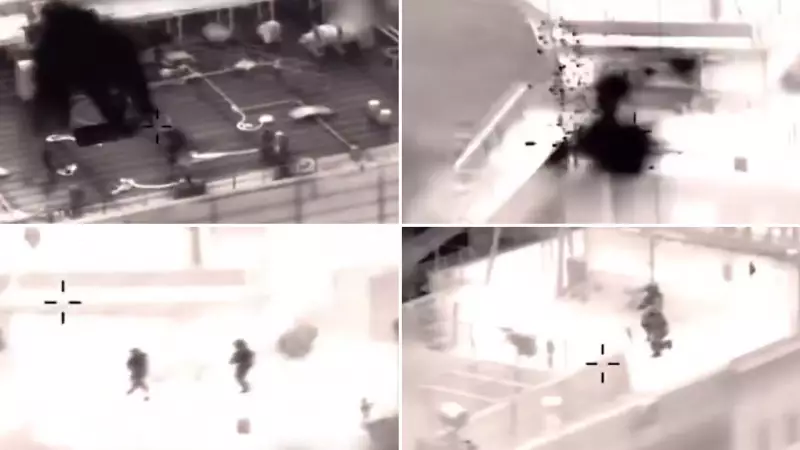
In a significant escalation of its maritime enforcement operations, the United States has intercepted and taken control of another oil tanker facing sanctions. The action, targeting a vessel accused of being part of a clandestine "ghost fleet" transporting embargoed crude oil, has drawn sharp criticism from Russia, further straining bilateral relations.
The Seizure in International Waters
The latest operation was carried out by the US Coast Guard in international waters east of the Caribbean Sea. Homeland Security Secretary Kristi Noem confirmed the seizure, stating that the motor tanker Olina was boarded and captured after it departed from Venezuela and attempted to evade American forces. Secretary Noem described the ship as a component of a shadowy network suspected of carrying oil under international embargo.
"The world’s criminals are on notice," Noem declared, framing the action as a direct warning to both criminal networks and hostile states. She emphasized that the operation was conducted with close coordination between the US Defence Department, State Department, and Justice Department, asserting it was fully consistent with international law. "The ghost fleets will not outrun justice. They will not hide under false claims of nationality," she added.

Washington's Justification and Moscow's Fury
The United States has defended its actions as the lawful enforcement of sanctions imposed on Venezuela and its associated oil shipments. US officials maintain that only approved channels aligning with American law and national security interests are permitted to handle Venezuelan crude oil. The Coast Guard's mission, according to Noem, is to continue seizing sanctioned tankers and disrupting funding streams linked to illicit activities, which she connected to broader threats like narco-terrorism.
However, the move has ignited a fierce diplomatic response from Moscow. Russia has strongly condemned the US capture, issuing a warning that such actions dangerously lower the threshold for using force against what it calls peaceful shipping. The Russian foreign ministry accused Washington of a "gross violation" of international maritime law and rejected the legitimacy of unilateral Western sanctions, insisting the vessel in question was authorized to sail under the Russian flag.
While Russian President Vladimir Putin has not commented directly on this incident, hawkish voices within Moscow have reacted with anger. This seizure follows an earlier high-profile interception that had already created tension between Washington and Moscow, with the US European Command stating the previous vessel was taken for violating US sanctions after attempts to evade restrictions, including changing its name and flag.
Implications and the Road Ahead
This event marks a clear intensification of the US campaign against the so-called ghost fleet—a collection of often older tankers that operate with obscured ownership and transponders switched off to circumvent sanctions on oil from countries like Iran, Venezuela, and Russia. The direct seizure of vessels on the high seas represents a more aggressive tactic.
The confrontation sets a precarious precedent in international waters and risks further escalating tensions across the Euro-Atlantic region. The fundamental clash lies in the US assertion of its right to enforce unilateral sanctions versus Russia's (and others') stance on the freedom of navigation and the legality of such seizures. As Secretary Noem put it, "This is owning the sea." The international community will be watching closely to see if this hardened stance leads to further maritime confrontations or a recalibration of shadow fleet operations.






