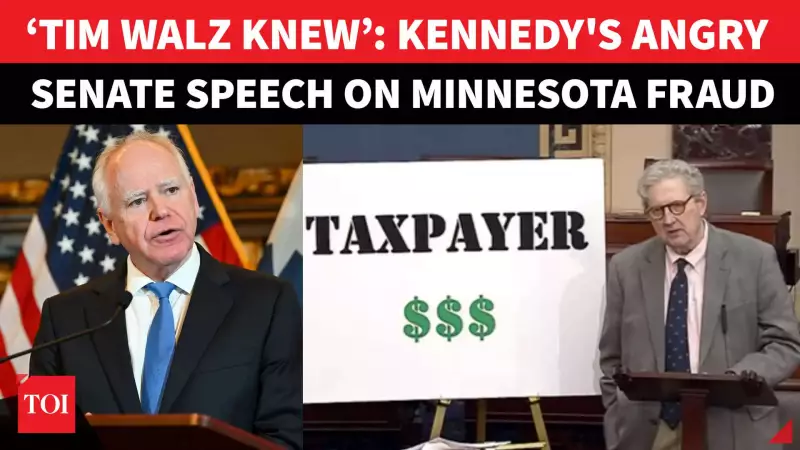
In a fiery address that shook the US Senate, Republican Senator John Kennedy launched a blistering attack on what he termed as massive and systemic welfare fraud, with a sharp focus on Minnesota. Delivering his speech on January 9, 2026, Kennedy called for urgent legislative action to stop the hemorrhage of hundreds of billions of taxpayer dollars annually.
The Core Accusation: Billions Lost to Fraud
Senator Kennedy, while acknowledging America's generosity towards the less fortunate, presented a stark contrast. He argued that this noble intent is being severely undermined by widespread fraud and abuse within the welfare system. Citing estimates from the Government Accountability Office (GAO), Kennedy revealed shocking details, suggesting the scale of the problem is national, with Minnesota highlighted as a prime example. He stressed that this is not a minor issue but a multi-billion dollar drain on public funds every single year.
Kennedy's Three-Pronged Solution for Reform
The senator did not just highlight the problem; he laid out a clear roadmap for a solution. He demanded a new reconciliation bill specifically designed to tackle this fraud head-on. His proposed reforms are built on three key pillars:

- Stronger Eligibility Rules: Tightening the criteria to ensure benefits reach only those who are truly qualified and in need.
- Strict Work Requirements: Introducing or reinforcing mandates for able-bodied recipients to engage in work or job training programs.
- Enhanced Enforcement: Bolstering mechanisms to investigate, detect, and punish fraudulent activities within the system.
A Political Ultimatum and the Path Forward
Kennedy's speech took a decisive political turn as he urged the Senate leadership to act with speed and determination. In a bold move, he declared that meaningful welfare reform could and should advance even without support from Democratic senators. This statement sets the stage for a potentially intense partisan battle over the future of social safety nets and government spending. The senator framed the issue as a matter of basic fiscal responsibility and justice for hardworking taxpayers whose money is being misappropriated.
The revelations about Minnesota fraud details have ignited a fresh debate on the efficiency and integrity of federal aid programs. As the call for the reconciliation bill gains momentum, all eyes will be on the Senate to see if Kennedy's urgent plea translates into concrete legislative action. The outcome could redefine the landscape of welfare and public spending in the United States for years to come.