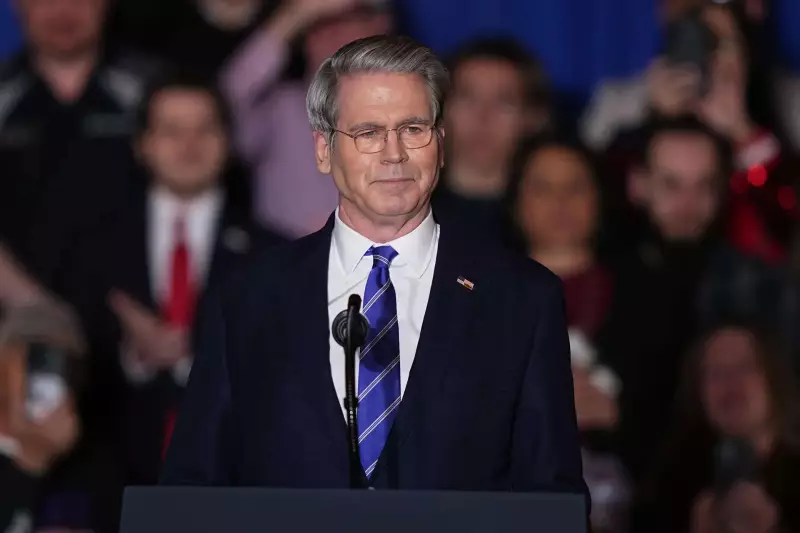
In a significant statement, US Treasury Secretary Scott Bessent has asserted that the Treasury Department possesses sufficient funds to manage potential refunds of emergency tariffs imposed during former President Donald Trump's administration, should the Supreme Court rule them illegal. However, he cautioned that the process of returning the money could extend over a period of weeks, months, or even up to a year.
Financial Capacity and Corporate Concerns
Bessent, in an interview with Reuters, expressed confidence in the Treasury's financial position to handle such an eventuality. With a cash balance of nearly $774 billion as of last Thursday and projections showing an end-March 2026 balance of around $850 billion, he stated the department is well-prepared. He also indicated that budget data for 2025 would likely show a deficit reduction of $300 billion to $400 billion from 2024, providing additional fiscal space.
Despite this readiness, Bessent voiced skepticism about the Supreme Court ruling against the tariffs and framed potential refunds as a "corporate boondoggle." He questioned whether companies like Costco, which is suing the government, would pass on any refunds to their customers if they had already shifted the tariff costs onto them. "It won't be a problem if we have to do it, but I can tell you that if it happens - which I don't think it's going to - it's just a corporate boondoggle," Bessent remarked.

Disputing Inflation Impact and Pass-Through Claims
The Treasury Secretary further contested the widely held view that the tariffs contributed to inflation in the United States. He argued that there was "very, very little, if any, pass-through" of tariff costs to consumers and noted that goods inflation had remained below the headline inflation rate. This stance directly challenges the concerns of many economists and importers who have long argued that tariffs act as a tax on consumers.
The legal challenge at the heart of the matter questions Trump's use of the International Emergency Economic Powers Act (IEEPA) to impose broad tariffs on nearly every major US trading partner. Importers and trade lawyers had anticipated a Supreme Court ruling on the case last Friday, but the court issued a decision on a different matter, leaving the timeline uncertain.
Uncertain Timeline and Disputed Figures
Bessent suggested that a delay in the court's decision might actually favour the Trump administration's position. Meanwhile, the financial stakes are substantial. According to data from US Customs and Border Protection, $133.5 billion in such tariffs had been assessed through 14 December, with Reuters calculations suggesting the total could be nearing $150 billion.
However, Bessent disputed this $150 billion estimate, stating it was "not the number" for tariffs potentially subject to refunds, as it includes revenues from tariffs imposed under other legal authorities. He did not provide an alternative specific figure for tariffs collected under the IEEPA.
Importers have raised alarms, warning that recouping tariffs paid could be a complex and difficult process if the Supreme Court finds the duties illegal. The Treasury's acknowledgment of a potentially lengthy disbursement period, stretching up to a year, underscores the administrative and logistical challenges involved in such a large-scale refund operation.