
US Report: China Lists Arunachal as Core Interest with Taiwan
A new Pentagon report to US Congress reveals China now treats Arunachal Pradesh as a 'core interest' like Taiwan, amid deepening China-Pakistan military ties. Read the full analysis.

A new Pentagon report to US Congress reveals China now treats Arunachal Pradesh as a 'core interest' like Taiwan, amid deepening China-Pakistan military ties. Read the full analysis.

Japan's Niigata assembly debates restarting the Kashiwazaki-Kariwa nuclear plant, the world's largest. A decision by Dec 22 could impact global energy trends. Read the full story.

A leaked Pentagon draft reveals China has likely armed over 100 ICBMs in new silos. US warns of the fastest nuclear expansion, with Beijing rejecting arms race charges. Read the full analysis.

The US welcomes India's SHANTI Bill 2025, calling it a step towards stronger energy security ties and opening civil nuclear sector to private players. Read more.

A new Pentagon report indicates China has likely deployed over 100 intercontinental ballistic missiles in silo fields, showing no interest in U.S.-led denuclearization talks. Get the full details.

China officially launches its online visa application system in India today, simplifying the process for tourists, business travelers, and students. Learn how to apply and what it means for India-China travel.

The SHANTI Bill sparks debate on private sector involvement in nuclear energy. Can smart regulation ensure safety? Explore the implications for India's regional energy security.

President Droupadi Murmu has given assent to the SHANTI bill, a landmark law allowing private companies to build and operate nuclear power plants in India. Read how this reforms the energy sector.

President Droupadi Murmu grants assent to the Shanti Bill, enabling private sector participation in India's nuclear energy sector. A landmark move for energy security and clean power.

India's new SHANTI Bill allows private investment in nuclear energy and limits supplier liability for accidents. Learn about the policy shift and its implications for India's energy future.

Japan reaffirms its non-nuclear principles after a security official's controversial remarks, reigniting a national debate fueled by threats from China, North Korea, and uncertainty over US guarantees under Trump. Read the full analysis.
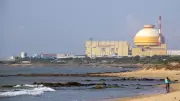
India's Parliament passes the landmark SHANTI Bill 2025, opening the civil nuclear sector to private and foreign investment for the first time, aiming for 100 GW nuclear capacity by 2047. Read the full analysis.
India's Lok Sabha approves the SHANTI Bill 2025, enabling private sector participation in civil nuclear energy to boost capacity and modernize safety regulations. Read the key changes.

India's proposed Shanti Bill 2025 allows private sector into nuclear energy but leaves critical accident liability questions unanswered. Read the full analysis of the bill's implications.

The proposed Shanti Bill 2025 aims to amend India's nuclear liability law, boosting foreign investment and domestic manufacturing for a clean energy future. Read the full analysis.

India's new SHANTI nuclear policy marks a significant liberalisation, aiming to boost energy capacity. However, experts raise credible concerns over relaxed liability norms and regulatory oversight. Read the full analysis.

Lok Sabha passes SHANTI Bill 2025, allowing private firms to build nuclear power plants and removing supplier liability. Aims for 100 GW nuclear capacity by 2047. Read more.

The Lok Sabha has passed a landmark bill allowing private sector participation in India's nuclear energy sector. Union Minister Jitendra Singh hails it as a milestone for national development. Read more.

Congress MP Manish Tewari criticizes SHANTI Bill for diluting supplier liability, undermining regulator autonomy, and favoring corporate interests. He demands Joint Parliamentary Committee review.

As India revives its nuclear expansion with the Shanti Bill, aiming for 100GW by 2047, experts call for super-strict safety protocols and real-time data to prevent Chernobyl or Fukushima-like disasters. Read more.
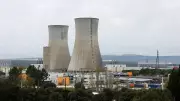
India plans major changes to its civil nuclear law to boost capacity to 100 GW, aiming for clean energy dominance. Explore the key amendments and their impact.

China announces full coverage for childbirth expenses by 2026 to tackle its declining population. Learn how this policy aims to incentivise young couples and address demographic challenges.

The SHANTI Bill 2025, tabled in Lok Sabha, repeals old atomic laws, paving the way for private investment to boost India's nuclear energy capacity to 100GW by 2047. Read the full analysis.
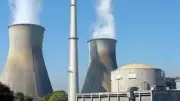
India's new SHANTI Bill 2025 replaces old atomic laws, permits private sector in nuclear energy, and sets liability caps to attract investment for a 100 GW target by 2047. Read the full analysis.

India's new SHANTI Bill 2025 allows private companies to build and operate nuclear plants, removes liability for global suppliers, aiming for 100GW nuclear capacity by 2047. Read more.

India and Russia agree to expand Kudankulam cooperation and explore a new site, accelerating India's nuclear power ambitions to achieve 100 GW capacity by 2047. Read the full analysis.

India will build next-generation BSMR-200 and SMR-55 nuclear reactors at Tarapur, Maharashtra, by 2033 with private sector participation. Read about this major energy milestone.

India and Russia agreed to expand nuclear energy cooperation during President Putin's visit, discussing a second power plant with Russian reactors. Read the full details.

Russia has formally proposed constructing a floating nuclear power plant for India, modeled on its 'Akademik Lomonosov' facility. This offer, made in December 2025, aims to boost India's energy security.

Russia will construct India's biggest nuclear power plant in Tamil Nadu, with Putin backing full-scale Kudankulam expansion. A landmark deal for clean energy.