
World's 10 Oldest Living Trees & Their Locations
Discover the world's 10 oldest living trees, from Sweden's 9,550-year-old Old Tjikko to California's Methuselah. Explore their incredible stories and where to find these ancient natural wonders.

Discover the world's 10 oldest living trees, from Sweden's 9,550-year-old Old Tjikko to California's Methuselah. Explore their incredible stories and where to find these ancient natural wonders.

A landmark US-India partnership aims to develop thorium as a nuclear fuel, leveraging India's vast reserves. This move accelerates India's three-stage nuclear program and enhances energy security. Essential reading for UPSC aspirants.

India and Pakistan exchanged lists of nuclear installations on New Year's Day under a bilateral agreement. The MEA confirmed the annual exchange aimed at preventing attacks. Read the full report.

India and Pakistan exchanged lists of nuclear installations under a 1988 pact, a key confidence-building measure. This marks the 35th uninterrupted annual exchange since 1992.

Archaeologists uncover a 13km stretch of Emperor Qin Shi Huang's 2200-year-old straight road, an engineering feat that shaped empires. Discover the secrets of this ancient marvel!

India's SHANTI Act ends state monopoly on nuclear energy, inviting private investment. Learn about the liability reforms, pricing debates, and the road ahead for clean energy goals. Read more.

Japan's Niigata assembly debates restarting the Kashiwazaki-Kariwa nuclear plant, the world's largest. A decision by Dec 22 could impact global energy trends. Read the full story.

The US welcomes India's SHANTI Bill 2025, calling it a step towards stronger energy security ties and opening civil nuclear sector to private players. Read more.

The SHANTI Bill sparks debate on private sector involvement in nuclear energy. Can smart regulation ensure safety? Explore the implications for India's regional energy security.

President Droupadi Murmu has given assent to the SHANTI bill, a landmark law allowing private companies to build and operate nuclear power plants in India. Read how this reforms the energy sector.

President Droupadi Murmu grants assent to the Shanti Bill, enabling private sector participation in India's nuclear energy sector. A landmark move for energy security and clean power.

India's new SHANTI Bill allows private investment in nuclear energy and limits supplier liability for accidents. Learn about the policy shift and its implications for India's energy future.

India's Parliament passes the landmark SHANTI Bill 2025, opening the civil nuclear sector to private and foreign investment for the first time, aiming for 100 GW nuclear capacity by 2047. Read the full analysis.
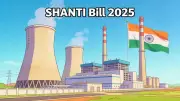
India's Lok Sabha approves the SHANTI Bill 2025, enabling private sector participation in civil nuclear energy to boost capacity and modernize safety regulations. Read the key changes.

India's proposed Shanti Bill 2025 allows private sector into nuclear energy but leaves critical accident liability questions unanswered. Read the full analysis of the bill's implications.
India's new Shanti Act 2025 replaces old nuclear laws, easing liability and inviting private players. While boosting imports, the push for indigenous fast-breeder tech remains crucial for self-reliance.

The proposed Shanti Bill 2025 aims to amend India's nuclear liability law, boosting foreign investment and domestic manufacturing for a clean energy future. Read the full analysis.

Visakhapatnam-based INSWAREB's novel nano concrete (NAC) can prevent cracks in nuclear reactor shields. Their irradiated cement materials promise to extend infrastructure life, with BARC now involved.

India's new SHANTI nuclear policy marks a significant liberalisation, aiming to boost energy capacity. However, experts raise credible concerns over relaxed liability norms and regulatory oversight. Read the full analysis.

Lok Sabha passes SHANTI Bill 2025, allowing private firms to build nuclear power plants and removing supplier liability. Aims for 100 GW nuclear capacity by 2047. Read more.

The Lok Sabha has passed a landmark bill allowing private sector participation in India's nuclear energy sector. Union Minister Jitendra Singh hails it as a milestone for national development. Read more.

Congress MP Manish Tewari criticizes SHANTI Bill for diluting supplier liability, undermining regulator autonomy, and favoring corporate interests. He demands Joint Parliamentary Committee review.

As India revives its nuclear expansion with the Shanti Bill, aiming for 100GW by 2047, experts call for super-strict safety protocols and real-time data to prevent Chernobyl or Fukushima-like disasters. Read more.

China is making a massive $3.9 billion push in the global race for nuclear fusion energy, aiming for a 'sun on Earth'. Can this be the key to limitless, clean power? Explore the details.
India plans major changes to its civil nuclear law to boost capacity to 100 GW, aiming for clean energy dominance. Explore the key amendments and their impact.
India's new SHANTI Bill 2025 replaces old atomic laws, permits private sector in nuclear energy, and sets liability caps to attract investment for a 100 GW target by 2047. Read the full analysis.

India's new SHANTI Bill 2025 allows private companies to build and operate nuclear plants, removes liability for global suppliers, aiming for 100GW nuclear capacity by 2047. Read more.

India and Russia agree to expand Kudankulam cooperation and explore a new site, accelerating India's nuclear power ambitions to achieve 100 GW capacity by 2047. Read the full analysis.

India will build next-generation BSMR-200 and SMR-55 nuclear reactors at Tarapur, Maharashtra, by 2033 with private sector participation. Read about this major energy milestone.

India and Russia agreed to expand nuclear energy cooperation during President Putin's visit, discussing a second power plant with Russian reactors. Read the full details.