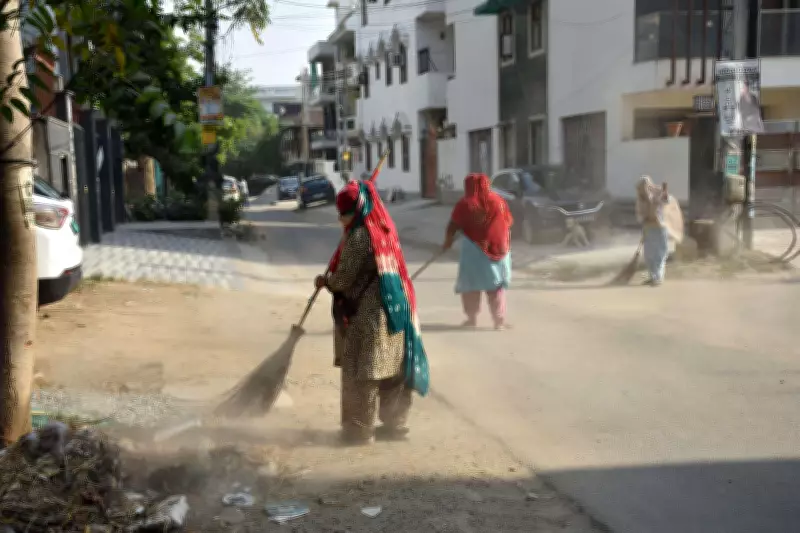
Gurgaon: In just a few months, the Municipal Corporation of Gurugram (MCG) has proposed spending nearly Rs 45 crore on two routine sanitation activities: road sweeping and door-to-door garbage collection. Both have seen extraordinary cost escalations. Sweeping costs have jumped 66%, while doorstep waste collection rates have risen 61% in six months.
Latest Tenders and Cost Comparisons
The latest figures reveal a striking pattern. MCG has floated fresh tenders worth Rs 22.5 crore for road sweeping, drain cleaning, and bush uprooting for six months from August 2026 to January 2027. Simultaneously, it has estimated another Rs 22.5 crore for door-to-door waste collection for the seven-month period from July 2026 to January 2027. These numbers are hard to ignore because both services were carried out at dramatically lower costs just months ago.
For road sweeping, MCG floated a stop-gap contract of Rs 6.8 crore in March 2026 for a three-month period from April to June 2026. Since the new tender covers six months, the comparable figure would be Rs 13.6 crore if the earlier contract were extended over the same duration. Hence, MCG's latest estimate translates into a cost increase of nearly 66%. More significantly, the comparison is for the same area.

The earlier arrangement covered sanitation operations across four city zones, which were recently revised to eight zones. The new Rs 22.5-crore estimate excludes zones 4 and 6, meaning the corporation proposes to spend 66% more despite not covering the entire city. An MCG official said, “For sweeping of zones 4 and 6, we are going to deploy MCG sanitation workers, nearly 3,000 in number. For sweeping estimates, the manpower will also increase, due to which the estimates have been enhanced.”
Door-to-Door Waste Collection Costs
The figures become even more startling when viewed alongside the corporation's latest door-to-door waste collection tender. From January to June 2026, the stopgap doorstep waste collection across the city cost approximately Rs 12 crore. For the following seven months, MCG has estimated the expenditure at Rs 22.5 crore. To make a comparison on an equivalent time basis, the earlier six-month cost works out to about Rs 14 crore for seven months. Against that, the new estimate represents an increase of nearly 61%.
MCG officials primarily attribute the increase to a proposed rise in collection vehicles from around 400 to 600. However, a 50% increase in fleet strength translating into a 61% increase in expenditure has raised fresh questions about the basis of the calculations. MCG executive engineer Sunder Sheoran said, “One of the significant reasons for the increase in the estimated project cost is that we have increased the number of vehicles from 400 to 600. Another reason is the enhancement in minimum wages.”
Overall Cost Surge
Combined, the two sanitation activities that would have cost approximately Rs 27.6 crore under earlier rates are now projected to cost more than Rs 45 crore. In other words, MCG's expenditure on these two routine civic functions has surged by nearly Rs 17.5 crore, an overall increase of about 63% within months.
A councillor, requesting anonymity, said, “The city has not expanded. Waste generation has not doubled. The road network requiring sweeping has not suddenly grown. There has been no publicly disclosed change in the scope of work substantial enough to explain such dramatic increases.” The councillor also raised the issue of agencies hired by MCG for stop-gap arrangements further subletting their work. “These agencies hired by the MCG sublet their work further, and this is where the accountability and efficiency of work goes for a toss. This should be stopped.”

Residents' Concerns
Some residents said the corporation should first address gaps in monitoring and service delivery before substantially increasing spending on stopgap waste collection. Rajesh Gera, a resident of Surya Vihar, said, “After Bimalraj (the agency hired after Ecogreen for a year) left, we have not been given any agency for our doorstep waste collection. We are managing our waste collection through local vendors, who collect waste from us and throw it on the roads. In the existing stopgap contract too, vehicles deployed are not GPS-enabled, and there is no monitoring, and they are not even deployed in our area. So even if MCG claims that the number of vehicles will be increased from 400 to 600, what is the proof? There is no monitoring, no check. This increase of cost is a waste of taxpayers’ money.”
Sanitation History and Future
The issue becomes even more significant considering Gurgaon's sanitation history. Over the past two years, the city has repeatedly witnessed changes in contractors, temporary arrangements, extensions, and emergency tenders. Despite rising expenditure, complaints regarding uncleared garbage, overflowing collection points, dirty roads, and clogged drains continue to surface from multiple sectors and colonies.
MCG officials also said that the stop-gap arrangement for doorstep waste collection would not have been initiated if the Haryana government had approved the Rs 606-crore contract for a period of five years, extended further to two years upon satisfactory performance.